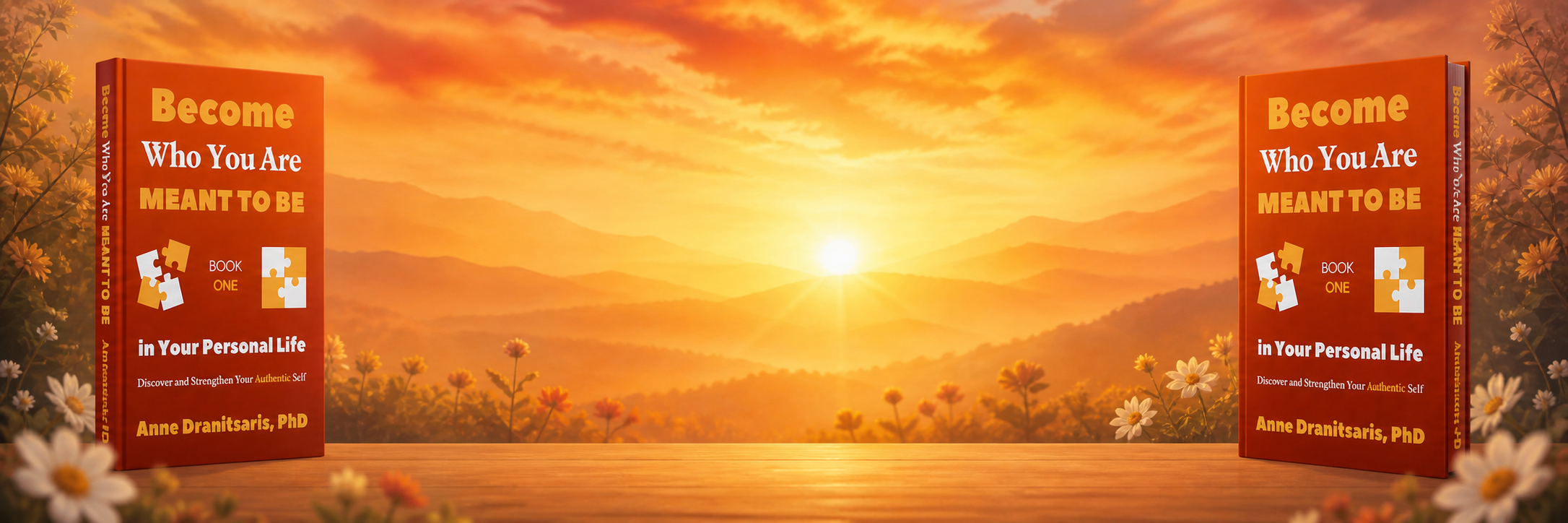
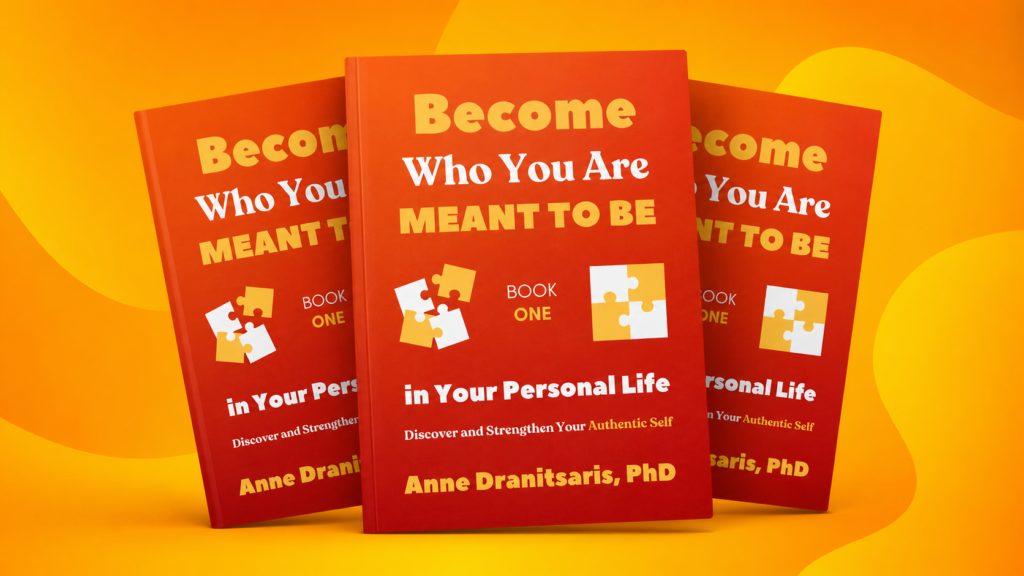
Become Who You Are Meant to Be In Your Personal Life
Discover and Strengthen Your Authentic Self
Understand why you feel like an imposter, why you keep putting yourself last, and how to stop getting in your own way so you can live with greater confidence, clarity, and self-trust.
What This Book Explores
A Roadmap to Discovering and Developing Your Authentic Self
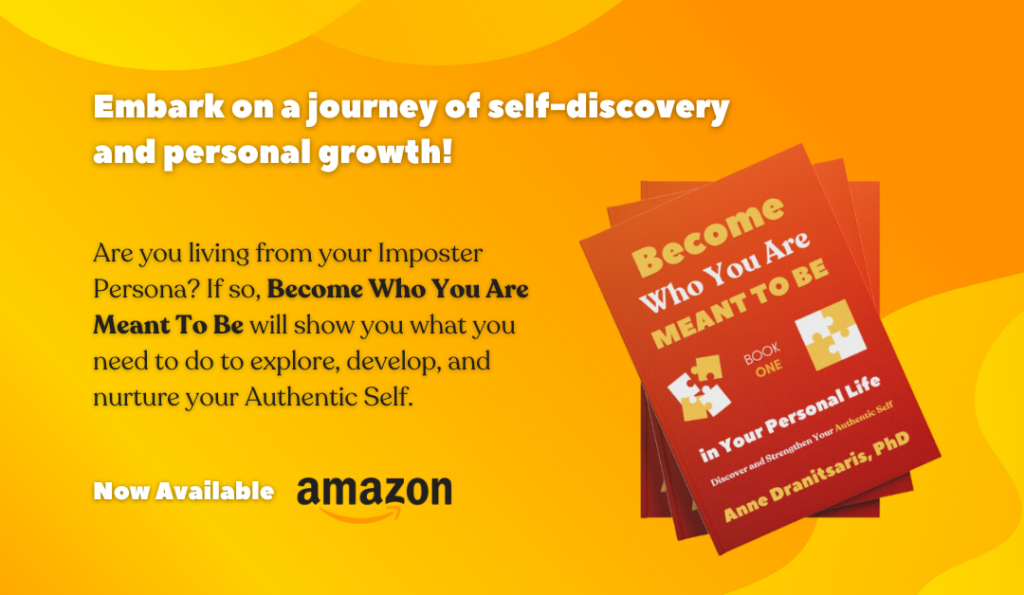
This book explores why capable people still struggle with self-doubt, low self-esteem, people-pleasing, and self-sabotage. It reframes imposter syndrome as a sign of delayed emotional development, not a personal flaw.
It introduces the imposter persona, the self-protective identity we create to feel safe, accepted, and in control. The book helps readers see how this persona keeps them overworking, overgiving, hiding their needs, and mistaking survival behaviors for who they really are.
Most importantly, the book offers a practical path to developing the authentic self. Through insight, neuropsychology, and 150 exercises, readers learn how to build self-awareness, confidence, assertiveness, healthy entitlement, and the inner authority to live with greater freedom and purpose.
If you have ever wondered how to get started with your development, this book is for you.
If you’ve ever wanted practical exercises at your fingertips to help you understand yourself, change old patterns, and strengthen your authentic self, this book is for you. It helps you discover the difference between your imposter persona, the self-protective identity shaped by fear, doubt, and old beliefs, and your authentic self, the part of you capable of confidence, clarity, self-trust, and personal authority.
This book shows how the brain’s neural pathways can become rooted in childhood beliefs, self-sabotage, and automatic self-protective behaviors that keep you from becoming who you are meant to be. Each of the six symptoms of the imposter persona includes five strategies, with five practices for each strategy, giving readers a total of 150 practical exercises to support real personal development and lasting change.

Who It Helps
This book is for the person who has done therapy, read the books, tried for years to figure themselves out, and is still stuck. For the person who can explain their childhood patterns perfectly yet still repeats them at home.
For the caregiver who is tired. For the over-functioner who is resentful. For the achiever who cannot understand why love makes them feel small. For the partner who keeps choosing emotionally unavailable people and calling it chemistry. For the couple who look fine on the outside but feel distant underneath.
And for anyone who is ready to stop managing relationships through fear and start building them from truth.
Recognize self-protective behavior
Identify your adaptive persona
Stop trying to fix yourself or your partner
Strengthen authentic capacities
Ready to Become Who You Are Meant to Be in Your Relationships ?
This book will help you see the patterns. Sometimes you need more support to change it.
If you, or you and your partner, recognize yourselves in these relationship dynamics, Anne’s psychotherapy and coaching services can help you understand what’s happening beneath the surface and begin creating healthier ways of relating.