Power Past the Imposter Syndrome
A Brain-Building Framework for Changing Painful, Self-Limiting Beliefs & Habits of Mind
Get the exact steps you need to end the suffering and limitations caused by feeling, thinking and acting like you are “not enough”.
What This Book Explores
Power Past the Imposter Syndrome reveals that imposter syndrome isn’t a flaw or a disorder—it’s a learned pattern rooted in early life experiences and reinforced through unconscious habits of mind.
Drawing on over 40 years of expertise in behavioral change, Dr. Anne Dranitsaris uncovers the true mechanics behind self-doubt, revealing how deeply ingrained beliefs shape the way you think, feel, and act.
This book introduces a brain-based framework for identifying and transforming the self-limiting patterns that keep you stuck. By understanding how your mind was conditioned, you gain the power to rewire it—freeing yourself to live from your authentic self.
If you have ever FELT LIKE AN IMPOSTER, DESPITE EVIDENCE TO THE CONTRARY, this book is for you.
You don’t act like an imposter because something is wrong with you—you do it because your brain learned how to protect you.
From an early age, experiences such as criticism, neglect, inconsistent support, or trauma can interrupt healthy development. To cope, your mind created protective identities with behavioral patterns designed to help you stay safe, accepted, and avoid emotional pain.
These behavioral patterns become automatic. They show up as self-doubt, overthinking, perfectionism, people-pleasing, or fear of being “found out.”
What once helped you survive is now limiting how you show up, succeed, and connect.
Who It Helps
This book is for anyone who feels held back by persistent self-doubt, regardless of their level of success. It speaks directly to high achievers, leaders, and individuals who appear confident on the outside but struggle internally with feeling like they are not enough.
It is also for:
- Professionals and high achievers who appear confident on the outside but privately struggle with persistent self-doubt and feeling “not enough.”
- Individuals who overwork, overthink, or push themselves to prove their worth while fearing they may be exposed as a fraud.
- Anyone who feels stuck in repeating patterns that limit their growth, success, or ability to fully show up in their life and relationships.
- Those ready to go beyond surface-level fixes and address the root causes of their experience to build lasting confidence, healthier relationships, and freedom from fear.
Get the Exact Steps to End the Suffering and Limitations
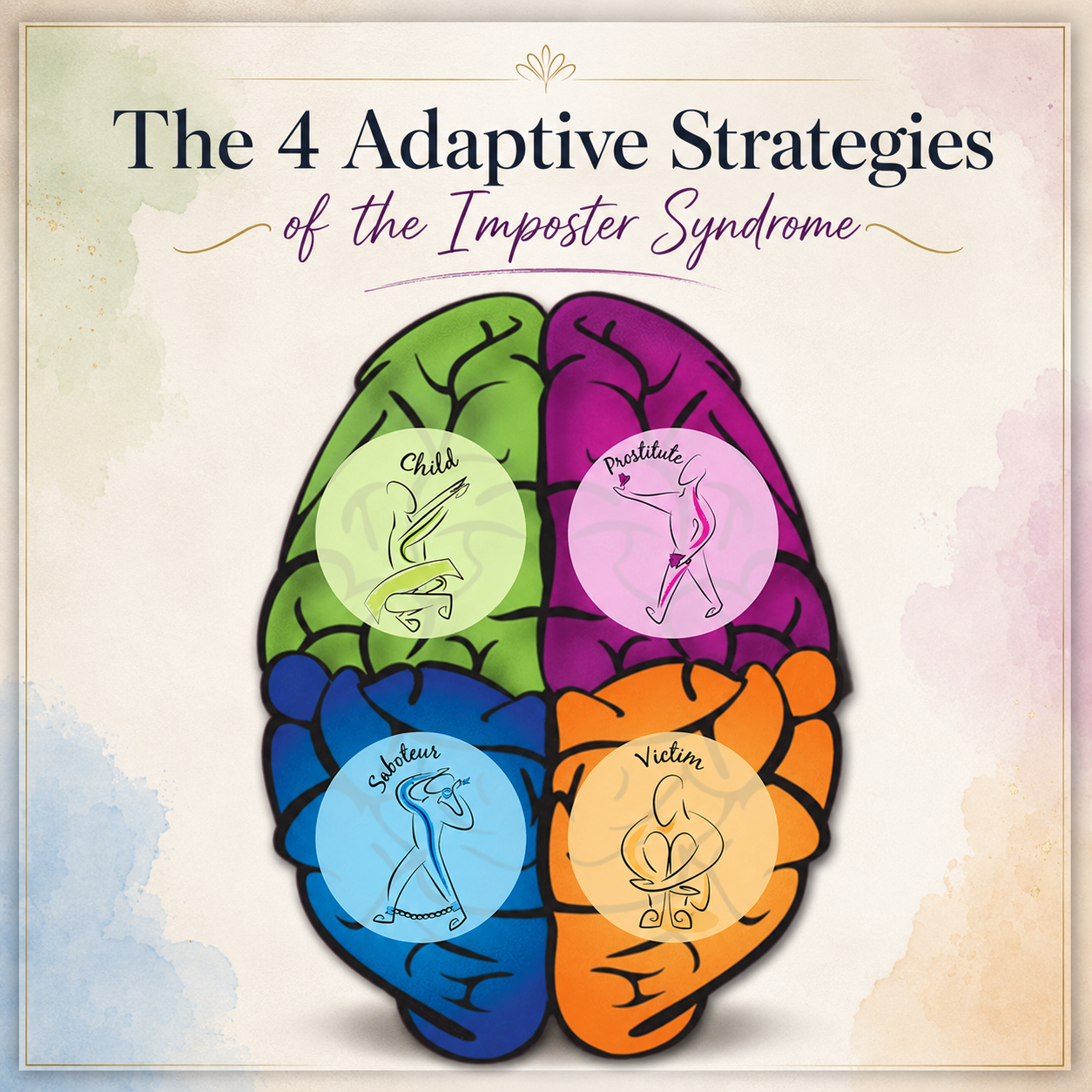
This book goes beyond theory to provide a clear, actionable path for transformation. It introduces a practical framework that helps you identify the unconscious patterns driving your imposter experience and shows you how to systematically change them. Central to this process is understanding the four Imposter Syndrome Personas—the Child, the Victim, the Prostitute, and the Saboteur—each representing a different way your mind tries to keep you safe by keeping you small.
By learning how to recognize, interrupt, and move beyond these personas, you begin to rewire your brain and reclaim your Authentic Self. This process empowers you to silence your inner critic, break free from limiting beliefs, and pursue your goals without fear. It is not about fixing yourself—it is about finally stepping into who you have always been capable of becoming.
Ready to Break Free from Imposter Syndrome and Become Who You Are Meant to Be?
This book will help you recognize the hidden patterns driving your self-doubt and feelings of “not enough.” Awareness is the first step—but real change often requires deeper support and guidance.
If you see yourself in these imposter patterns, Anne’s psychotherapy and coaching services can help you understand what’s happening beneath the surface.
Through this work, you can begin to rewire those limiting beliefs, step out of the imposter cycle, and build a more confident, authentic way of showing up in your life and work.