
Become Who You Are Meant to Be In Your Personal Life
Discover and Strengthen Your Authentic Self
Understand why you feel like an imposter, why you keep putting yourself last, and how to stop getting in your own way so you can live with greater confidence, clarity, and self-trust.
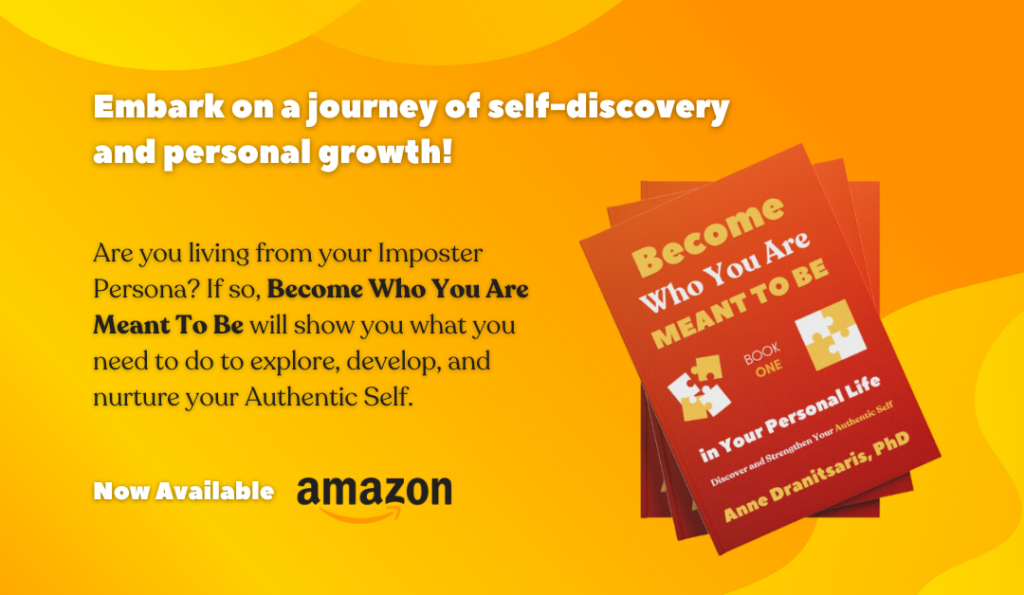
A Roadmap to Discovering and Developing Your Authentic Self
This book explores why capable people still struggle with self-doubt, low self-esteem, people-pleasing, and self-sabotage. It reframes imposter syndrome as a sign of delayed emotional development, not a personal flaw.
It introduces the imposter persona, the self-protective identity we create to feel safe, accepted, and in control. The book helps readers see how this persona keeps them overworking, overgiving, hiding their needs, and mistaking survival behaviors for who they really are.
Most importantly, the book offers a practical path to developing the authentic self.
If you have ever wondered how to get started with your development, this book is for you.
If you’ve ever wanted practical exercises at your fingertips to help you understand yourself, change old patterns, and strengthen your authentic self, this book is for you. It helps you discover the difference between your imposter persona, the self-protective identity shaped by fear, doubt, and old beliefs, and your authentic self, the part of you capable of confidence, clarity, self-trust, and personal authority.
This book shows how the brain’s neural pathways can become rooted in childhood beliefs, self-sabotage, and automatic self-protective behaviors that keep you from becoming who you are meant to be. Each of the six symptoms of the imposter persona includes five strategies, with five practices for each strategy, giving readers a total of 150 practical exercises to support real personal development and lasting change.

Who It Helps
Become Who You Are Meant to Be in Your Personal Life is for people who appear capable and successful on the outside, yet feel disconnected from themselves on the inside. You may have spent years trying to meet expectations, avoid disappointment, prove your worth, or become the person others needed you to be. Even when you know your patterns are limiting you, you may still find yourself repeating them, questioning yourself, or feeling unable to live with the confidence and authenticity you long for.
This book is for anyone who recognizes that they are living from an adaptive or imposter persona rather than their authentic self. You may struggle with self-doubt, perfectionism, people-pleasing, procrastination, self-sabotage, overachievement, or the feeling that you are never quite enough.
It is also for readers who are ready for more than insight alone. Rather than simply explaining why you feel stuck, the book provides practical exercises organized around six core symptoms of the imposter persona. These practices help you recognize the patterns that keep you from becoming yourself, strengthen the capacities that support your authentic self, and begin making choices that reflect your own needs, talents, and potential.
For anyone ready to do the real work of transforming the automatic, self‑sabotaging patterns that once kept them safe but now limit their growth, fulfillment, and happiness.
Ready to Become Who You Are Meant to Be in Your Personal Life ?
This book reveals a truth many never discover: the persona—the polished, protective version of you—is the real imposter.
Its mission is simple: keep you safe. But safety alone is not a life.
If you’re no longer satisfied with merely surviving, if you feel the pull toward your deeper potential, you may need support to make that shift.
Anne’s psychotherapy and coaching services help you uncover what’s happening beneath the surface, break free from the patterns that hold you back, and begin building healthier, more authentic ways of relating—to yourself and to others.