Your Results
Wavering Level
Your score was between 10 – 19
This result suggests that you have access to your authentic self, but your self-trust can waver when you feel uncertain, pressured, emotionally exposed, or unsure of where you stand with someone. You do not believe it is your job to take responsibility for other people’s emotions, but your nervous system may still react as though you might be in trouble if you don’t.
You may have done meaningful work on yourself. You may understand your patterns, recognize your needs, and know that another person’s mood, disappointment, withdrawal, or emotional reaction does not automatically belong to you. Yet when trust has not been established, when someone is upset, or when you feel judged, excluded, criticized, or misunderstood, old self-protective habits can still surface before you have time to steady yourself.
This can show up as hedging, appeasing, overexplaining, second-guessing yourself, softening your truth, or trying to make sure the other person is okay before you feel okay. You may know who you are, but another person’s approval cues, tone, distance, or reaction can still shake your sense of self and pull you into doubt.
From a developmental perspective, this means your Authentic Self is developed, but not always stable under pressure. You can often pause, reflect, and return to yourself, but when stress, uncertainty, or early trust gaps activate an old emotional story, the adaptive persona may still step in to protect you.
This level is not about being deeply stuck in codependent patterns. It is about the moments when fear still has enough power to interrupt your first response. You may not lose yourself completely, but you may temporarily move away from your own clarity, needs, or voice in order to reduce tension, avoid disapproval, or regain a sense of safety.
You have already developed a meaningful level of awareness. The next stage is about stabilizing that awareness so your confidence no longer rises and falls with other people’s reactions.

Developmental delays cause us to become stuck in adaptive patterns of behavior that prevent us from developing the capacities of our authentic self.
Become Who You Are Meant to Be
Your next stage of development is about strengthening steadiness under pressure. At this level, the work is not about discovering that you have patterns. You likely already know that. The work is about recognizing the precise moment when your nervous system starts reacting as though another person’s mood, disappointment, silence, or disapproval is a threat.
This is where your self-trust begins to waver. You may start explaining too much, apologizing too quickly, adjusting what you really think, or scanning the other person for signs that you are still accepted. The old script may not take over completely, but it can still create enough doubt that you move away from your own centre.
The developmental goal is to lessen the grip fear has on your reaction to the emotions and needs of others. This means learning to pause before appeasing, breathe before explaining, and notice when your body is reacting to an old story rather than the present situation. It also means building greater tolerance for discomfort, so you do not have to rush in to fix, smooth over, prove yourself, or regain approval.
As you strengthen this capacity, your boundaries become steadier, your voice becomes clearer, and your confidence becomes less dependent on how others respond. You begin to trust that you can care about another person’s feelings without taking responsibility for them. You can stay connected without abandoning yourself. You can feel discomfort without making it proof that you have done something wrong.
As you strengthen this capacity, your boundaries become steadier, your voice becomes clearer, and your confidence becomes less dependent on how others respond. You begin to trust that you can care about another person’s feelings without taking responsibility for them. You can stay connected without abandoning yourself. You can feel discomfort without seeing it as proof that you have done something wrong.
This stage refines your voice, steadies your boundaries, and converts wavering self-trust into something more durable. The work now is to remain connected to your authentic self when your nervous system is tempted to return to the old protective scripts.

Next Steps

Work With Me
At the Wavering Level, the work is about stabilizing your connection to your Authentic Self when pressure, uncertainty, or another person’s emotional reaction activates old self-protective habits. Therapeutic coaching can help you recognize the moment your nervous system starts to react, understand the script that gets activated, and practice staying present to yourself instead of moving into appeasing, overexplaining, self-doubt, or emotional responsibility.
Explore working with me to strengthen your self-trust, steady your boundaries, and respond from your Authentic Self with more consistency.
My Approach
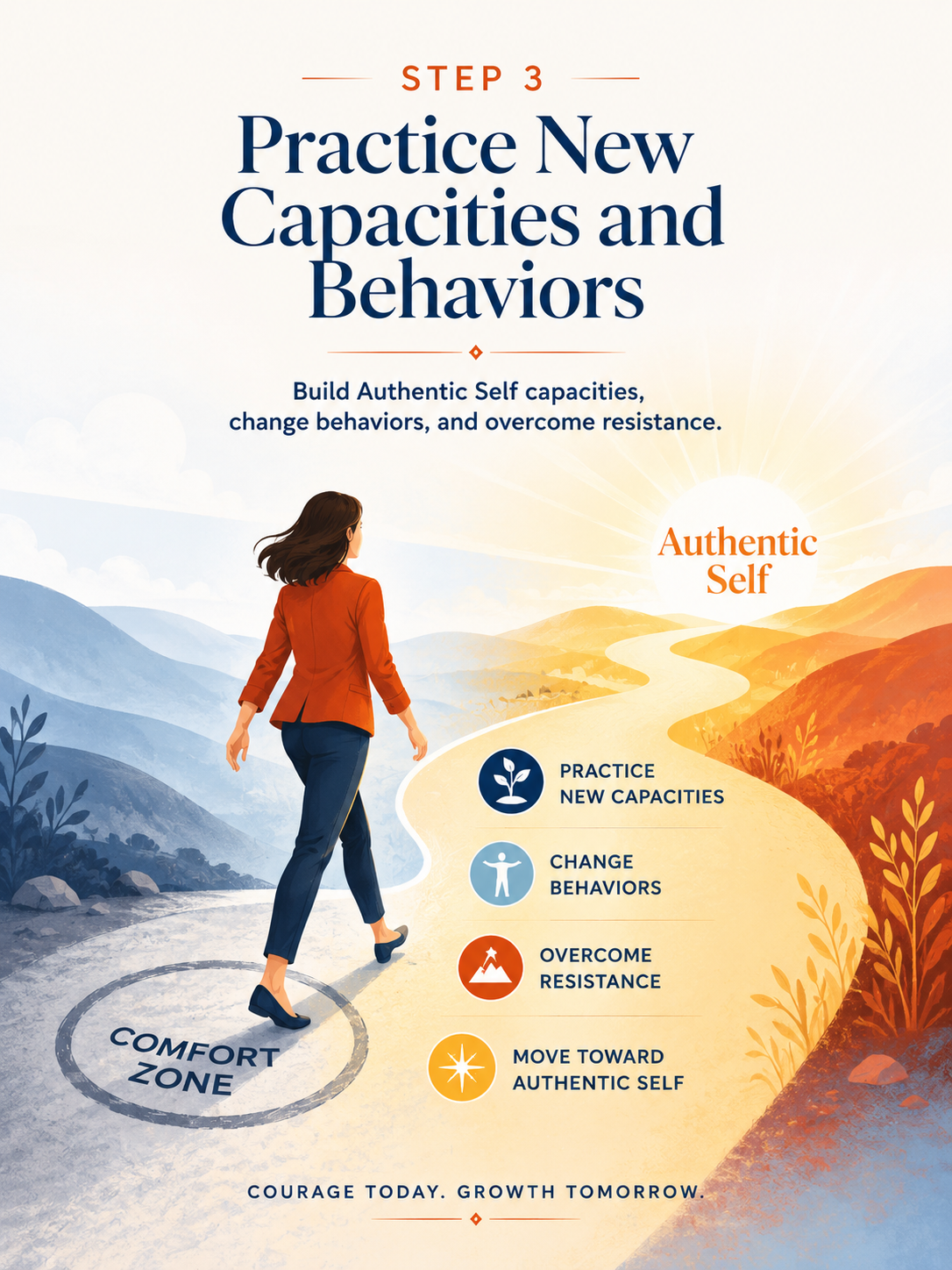
My approach helps you understand the relationship between the nervous system, the adaptive persona, and the authentic self. At this level, we focus on the moments when you know what is true for you, but pressure, uncertainty, or another person’s response causes you to waver. Through self-awareness, mindfulness, and developmental work, you learn to recognize the old script without automatically obeying it.
Learn more about my approach to emotional development, self-awareness, and authentic change.

Book a Consultation
This result suggests that your authentic self is developed, but your self-trust may still become unsteady when you feel emotionally pressured, uncertain, or responsible for another person’s reaction. A consultation can help you clarify where the wavering shows up, what triggers it, and what kind of support would help you strengthen your next stage of development.
Book a consultation to explore how to steady your self-trust and respond from your authentic self more consistently.