About Anne

More Than Four Decades Understanding What Drives Human Behavior
For more than four decades, my work has centred on one enduring question:
Why do intelligent, capable, self-aware people continue to behave in ways that do not reflect what they know, want, or are capable of becoming?
I began my psychotherapy practice decades before psychotherapy became a regulated profession in Ontario. I was coaching leaders before the International Coaching Federation existed. Over the years, I have worked across psychotherapy, relationships, personality type, mindfulness, leadership development, team effectiveness, and organizational consulting.
I have also watched these fields evolve.
My work has evolved with them, but the focus has remained remarkably consistent: understanding the person beneath the behavior and helping people develop beyond the patterns that limit them.
I have never been interested in simply helping people behave better. I want to understand why the behavior is there in the first place and what needs to develop so something different becomes possible.
I Have Never Been Interested in Helping People Become Someone Else’s Idea of Who They Should Be
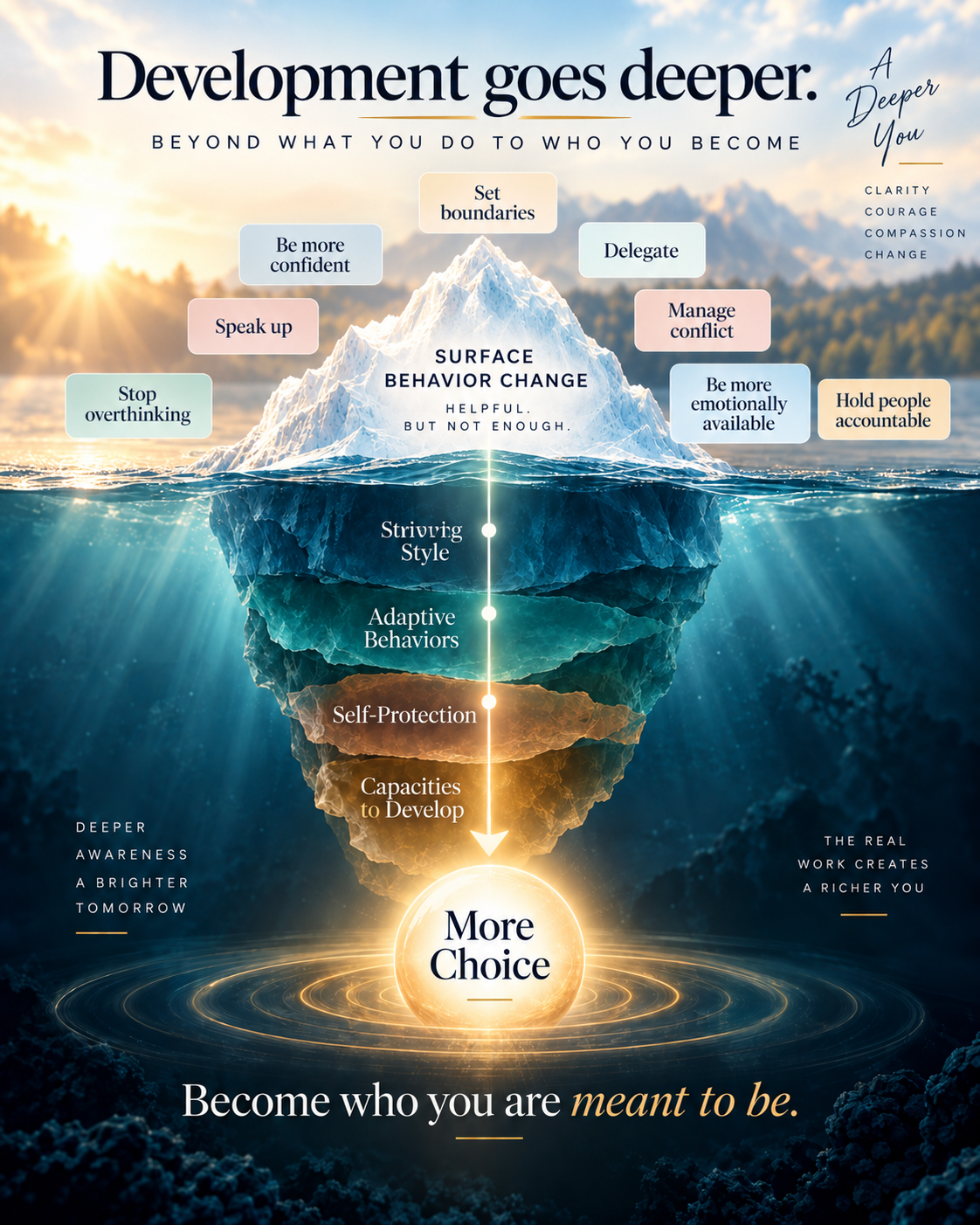
Much of personal and professional development starts by identifying what someone should do differently.
Be more confident. Set better boundaries. Delegate. Speak up. Stop overthinking. Manage conflict. Become more emotionally available. Hold people accountable.
But telling people what they should do does not necessarily give them the psychological capacity to do it.
My work has always gone deeper.
I help people understand the difference between the personality they were born with, the behaviors they developed to adapt and protect themselves, and the capacities that still need to develop if they are going to have more choice in how they live, relate, and lead.
The goal is not to teach you how to perform a better version of yourself. It is to help you become who you are meant to be.
Two Distinct Pathways Into My Work
People come to me for very different reasons. Some are struggling with patterns in their personal lives or relationships. Others want to become more effective leaders, develop their teams, or address behavior that is affecting performance at work.
The context determines the pathway.
The depth of the work comes from more than forty years of understanding personality, psychological needs, behavior patterns, self-protection, and human development.
My work today follows two distinct pathways.
Leadership & Team Development
I was coaching leaders before leadership coaching became an Industry. My leadership work developed alongside my psychotherapy practice. I studied Management for the 80s at Ryerson University and took numerous leadership courses while serving as Clinical Director at Nutritional Body Care and Director of Development at Seroyal International.
I founded Sage Developmental Resources in 1997 to support my growing executive coaching practice. Then, in 1998, Heather and I co-founded Caliber Leadership Systems to expand our joint expertise, and I spent approximately 27 years working with leaders, executives, entrepreneurs, organizations, and teams.
From the beginning, my approach went beyond skills. I have always looked at how personality shapes leadership and team behavior, including how people use authority, make decisions, manage conflict, delegate, communicate, and respond under pressure.
People do not leave their personality behind when they enter the workplace.
Personal & Relationship Development
My psychotherapy practice began decades before psychotherapy became a regulated profession in Ontario. Over the years, I have worked with individuals, couples, and families on issues including eating disorders, codependency, self-esteem, emotional regulation, identity, relationships, and the self-protective patterns people develop to manage vulnerability and get their needs met.
What has always interested me is what sits beneath the presenting problem. Rather than focusing only on changing behavior, I help people understand the personality, emotional needs, and developmental patterns keeping it in place, then build the capacities that create greater choice.
Today, I bring more than four decades of clinical and developmental experience to psychotherapy, relationship, and therapeutic coaching.
Therapy provides the context for people to explore, in a safe environment, who they have become and who they are meant to be.
A Lifelong Fascination With Psychological Type
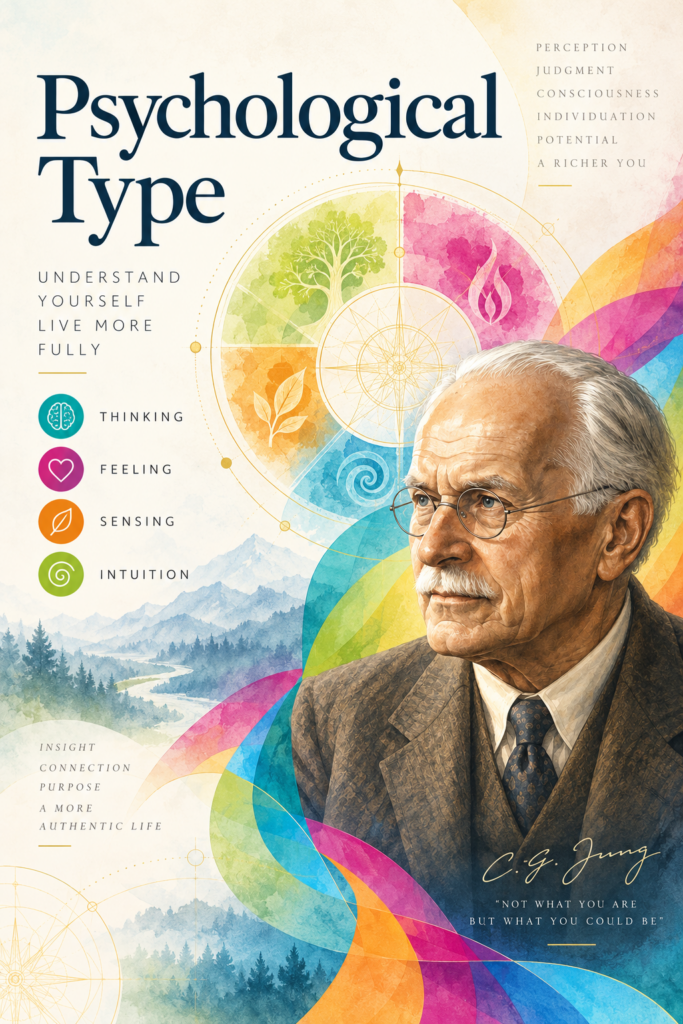
I was first introduced to Carl Jung’s theory of Psychological Type during my psychotherapy training in the early 1980s. His understanding of the different psychological functions people naturally rely on gave me a new way of understanding why two people can experience the same situation so differently.
My interest deepened when I later attended a management workshop using the Myers-Briggs Type Indicator®. Seeing psychological type applied to communication, leadership, decision-making, and working relationships cemented my interest.
I went on to become an MBTI Certified Practitioner and have spent decades applying Jungian psychological type with individuals, couples, leaders, and teams.
Over time, however, I became increasingly interested in what personality type alone could not explain.
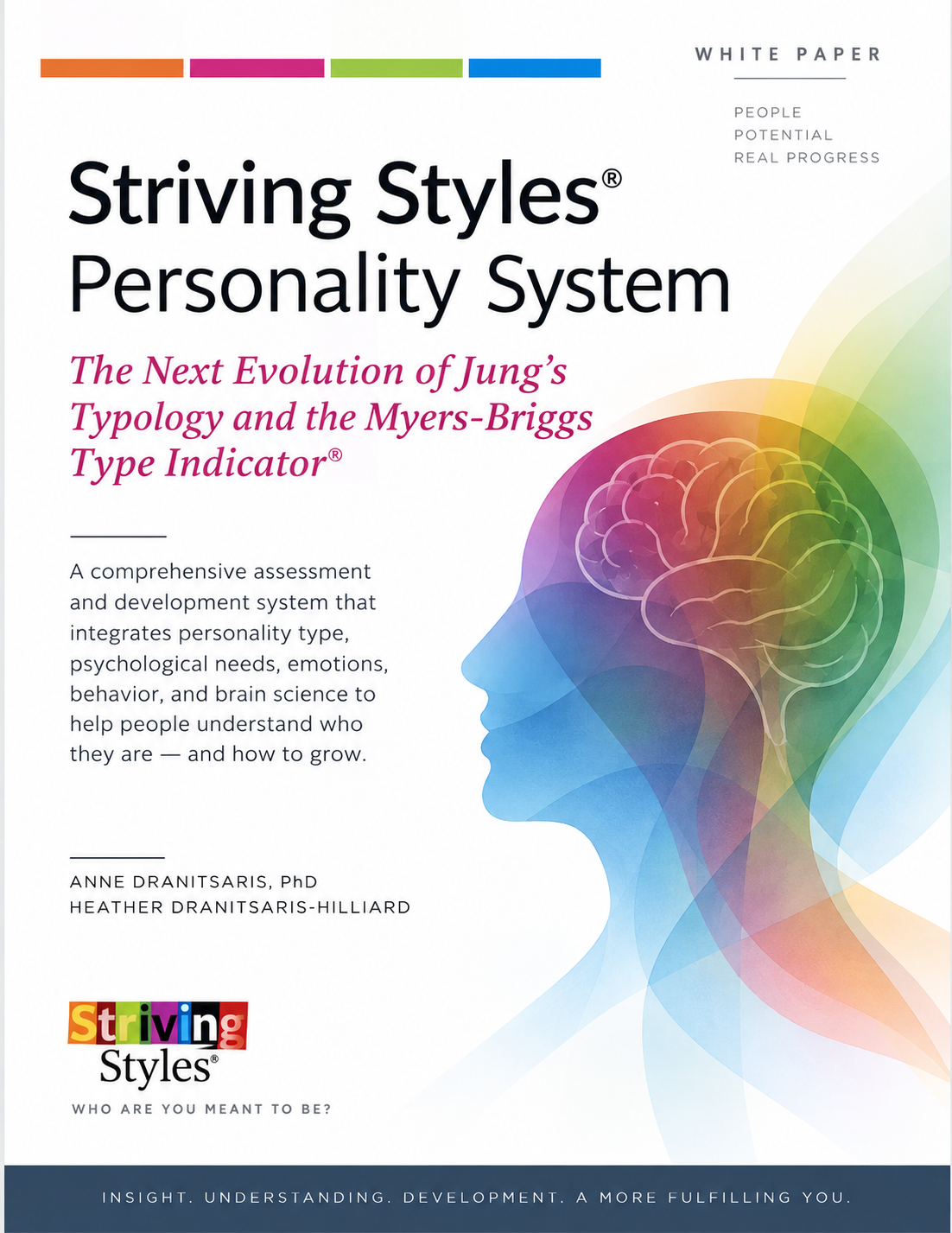
That question eventually led to the development of the Striving Styles Personality System.
From O, The Oprah Magazine to Who Are You Meant to Be?
Together with my daughter and business partner, Heather Dranitsaris-Hilliard, I co-created the Striving Styles Personality System to take personality understanding beyond description and into development.
Its introduction to a wider audience happened somewhat unexpectedly.
In 2009, O, The Oprah Magazine approached me. They were looking for someone to create a quiz that would help readers answer a deceptively simple question: Who are you meant to be? I had just ten days to develop the quiz and write the descriptions of the different styles. Unfortunately, the magazine only had room for 7 of the 8 Striving Styles, but I accommodated. Fortunately, much of the thinking behind the Striving Styles had already emerged from decades of my work with personality, psychotherapy, leadership, and human behavior.
The “Who Are You Meant to Be?” quiz appeared in the November 2009 issue of O and introduced readers to the Striving Styles. The magazine later featured the work again and selected the article for its annual hardcover collection of notable pieces.
But a magazine quiz could only open the door.
The full system went much deeper. We wanted people to understand not only their personality, but the psychological needs driving their behavior, what happens when they move into self-protection, and what they need to develop to become more fully themselves.
That work became the foundation of our book, Who Are You Meant to Be?, published a few years later. The book introduced the Striving Styles Personality System in depth and gave readers a way to understand their natural wiring, recognize self-protective patterns, and begin moving toward their potential.
What began as a question in the pages of O has become a developmental system for answering it: Who are you meant to be, and what needs to develop for you to become that person?

A Career Built on Integration, Not a Single Method
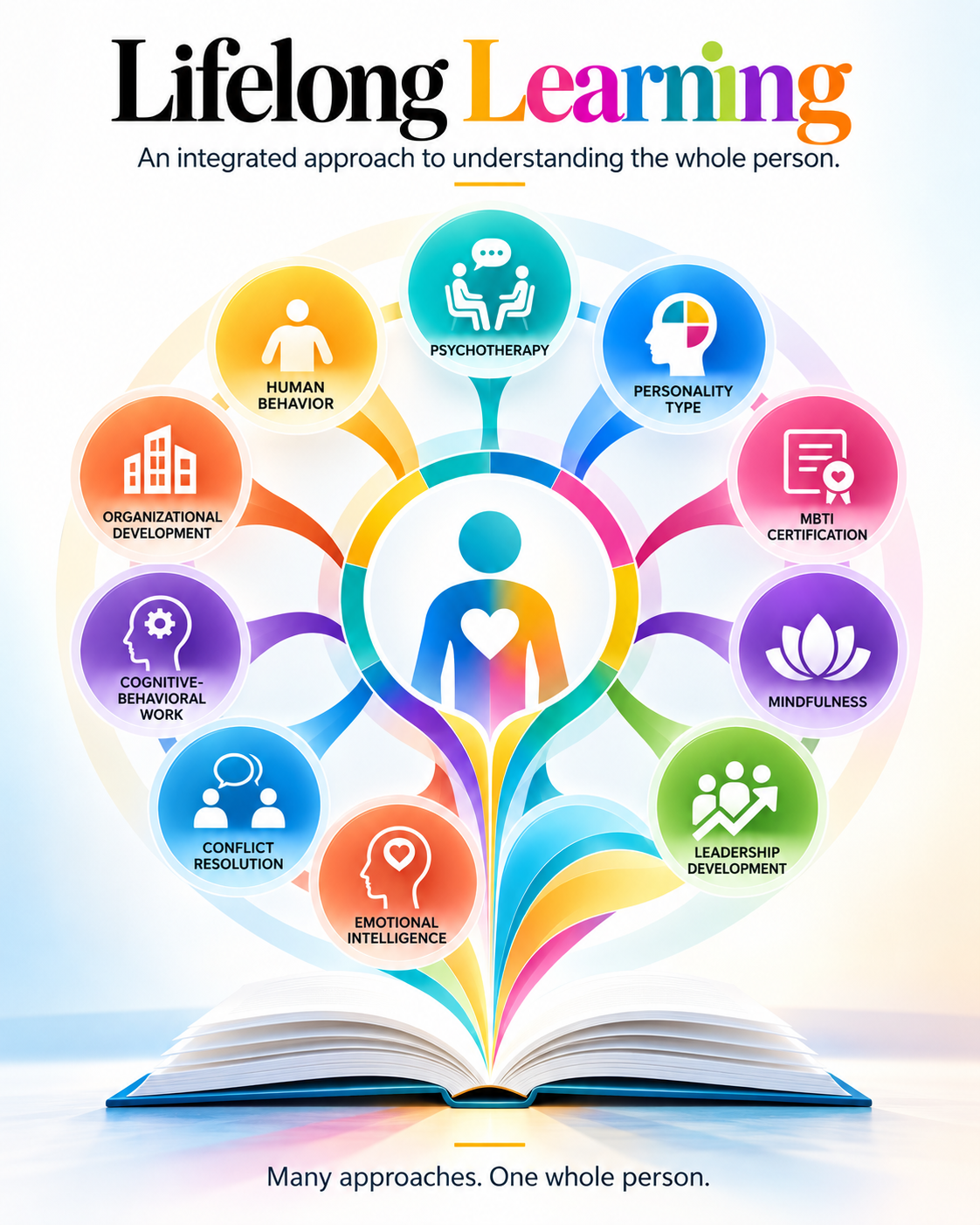
My education has never been confined to one discipline or one way of understanding human development.
I am a graduate of the Centre for Training in Psychotherapy and studied at the Masterson Institute for Disorders of the Self in New York. I earned a Ph.D. in Therapeutic Counselling from the Open International University for Complementary Medicines, completing my doctoral work while undertaking my psychotherapy training at the Center for Training in Psychotherapy in Toronto. My studies were influenced by CTP faculty, including Dr. Joel L. Whitton, M.D., Ph.D., FRCP(C), a psychiatrist and Professor of Psychiatry at the University of Toronto and one of CTP’s founding faculty.
Mindfulness and contemplative practice have been another important part of that journey. I completed a Certificate in Mindfulness-Based Stress Reduction through the University of Toronto, later opened and operated the Centre for Mindful Therapies, completed yoga teacher training, and have been a long-time practitioner of Transcendental Meditation.
In addition to being an MBTI Certified Practitioner, I have been certified to administer the BarOn EQ-i and Thomas-Kilmann Conflict Mode Instrument.
Over the years, I have integrated psychodynamic, developmental, cognitive, behavioral, personality-based, mindfulness, and contemplative approaches rather than forcing every person or problem through a single model.
For me, lifelong learning has never been about accumulating credentials. It has been about continuing to deepen my understanding of the whole person and what makes genuine development possible.
Turning Decades of Work Into Books and Developmental Frameworks
Writing has always been an extension of my work with people.
I have written extensively about personality, leadership, relationships, codependency, psychological development, Imposter Syndrome, and the patterns that keep people from living and leading as fully as they are capable of doing.
My books include Who Are You Meant to Be?, So, You Think You Can Lead?, Power Past the Imposter Syndrome, the Become Who You Are Meant to Be series, and an extensive collection of books and developmental resources based on personality type and Striving Styles available on Amazon.
Although the subjects vary, they all return to the same fundamental question:

The Work Continues
After more than four decades, I remain fascinated by what allows people to genuinely change rather than simply understand themselves better.
Insight helps us see the pattern. Personality helps us understand it. Development gives us the capacity to choose differently.
That thread has run through my work from the beginning, from psychotherapy and psychological type to leadership coaching, mindfulness, writing, and the creation of the Striving Styles.
Understand what is driving the behavior.
Develop what has not yet developed.
Become who you are meant to be.