Your Results
Overidentified Persona Level
Your score was between 72 – 96
At this level, you have little awareness of your authentic self because to you, your adaptive persona is who you are. The roles you perform, the rules you follow, and the ways you care for others and put their needs first feel like your personality rather than strategies you developed to preserve safety, approval, and connection.
Your childhood environment led to an insecure attachment and the development of an adaptive persona that believed survival depended on being good, selfless, helpful, agreeable, and easy to love. Because being safe required you to organize yourself around pleasing other people and making sure they were okay, your adaptive persona completely took on that identity. Instead of developing awareness of your own feelings, needs, preferences, and limits, you became highly skilled at scanning moods, meeting expectations, preventing conflict, and becoming what others needed you to be.
Others became dependent on your not needing anything, and compensating for anything lacking became essential to your self-regulation. Now, when others need you, you feel valuable, secure, and certain of your place in the relationship. Caretaking, pleasing, fixing, and remaining useful are not simply things you do. They are the rules your persona depends on to regulate your self-esteem and emotional stability. You also believe that people who do not put others first are selfish because self-sacrifice feels inseparable from being a good and loving person.
As a result, your authentic self remains neglected in the shadows of your psyche. Its development was delayed because so much of your energy went into developing your adaptive persona. You do not experience a clear separation between who you are and the adaptive persona that has been running your life.
Because your attention is directed outward, your own feelings, needs, preferences, and limits are difficult to identify. You do not know what you want or need and may feel confused when someone asks. You recognize exhaustion before recognizing your need for rest, resentment before recognizing that something feels unfair, and anxiety before recognizing the fear that keeps you compliant.
Self-abandonment is automatic because you do not know another way of relating. You agree before considering yourself, apologize when you have done nothing wrong, remain in situations that deplete you, and suppress your needs because expressing them feels selfish, unsafe, or likely to provoke conflict, withdrawal, or disappointment.
Relationship freedom is not only the absence of self-abandonment, but the presence of your authentic self. Your work is to strengthen the relationship capacities you have yet to fully develop, so that your authentic self is present in all areas of your life.

How You Use Relationship Rules
You depend on your relationship rules to regulate your emotional states. Breaking a rule can feel like a life-or-death situation because the rules are what keep you feeling safe, worthy, and in control. Other people may be allowed to rest, say no, put themselves first, or leave something undone, but you do not get the same break. You must be useful, stay productive, avoid disappointing anyone, keep going, and take care of whatever needs to be done. Because following the rules reduces anxiety and regulates your self-esteem, breaking them feels dangerous, even when you are exhausted or overwhelmed.
The self-talk of your adaptive persona is authoritarian and judgmental. It speaks to you in ways you would never dream of speaking to anyone else. Because your attachment is insecure and love feels conditional, your inner voice demands that you behave in ways that preserve approval and connection. It tells you that you should be able to handle more, that resting is lazy, that your needs can wait, and that other people have it harder. Instead of responding to fatigue, sadness, resentment, or fear with curiosity, you order yourself back into the role and demand that you perform it better.
Rest can feel uncomfortable because it removes the structure your persona depends on to keep you regulated. When you stop doing, fixing, helping, or taking responsibility, guilt, anxiety, emptiness, and self-criticism can quickly surface. You return to productivity or caretaking because following the rules restores the familiar sense that you are good, needed, worthy, and safe.

Your answers suggest that the capacities of the authentic self remain undeveloped. Because of your external focus, you are unable to recognize your feelings and needs, maintain a stable sense of self when someone reacts differently from you, or make choices without allowing fear, guilt, or another person’s approval to take over.
From a developmental perspective, this is square one. Your self-protective system is so dominant that turning your attention toward yourself can feel unfamiliar, uncomfortable, or even unsafe. The goal is not to force major boundaries, confront others, or suddenly stop caretaking. Those changes can feel overwhelming when your sense of safety has long depended on being useful, compliant, and focused on other people.
Your first task is self-awareness. This means beginning to notice what you feel, need, want, prefer, and value before your attention automatically moves outward. At first, you may not know the answers. You may only recognize that you are tired, resentful, anxious, or overwhelmed. That is still a beginning.
Just as important is learning to tolerate the feelings that arise when the focus is on you. Guilt, fear, anxiety, emptiness, or self-criticism may surface when you pause, rest, or consider your own needs. Self-regulation helps you stay with those feelings without immediately returning to pleasing, fixing, helping, or complying.
This is why development begins with Identity and Internal Grounding capacities such as Self-Awareness. As you become more aware of your internal experience and more able to tolerate the discomfort of paying attention to yourself, your authentic self can begin to emerge from beneath the roles and rules that have directed your life.
Become Who You Are Meant to Be
At this level, the work begins by turning your attention toward yourself. This may feel unfamiliar or uncomfortable because your attention has been organized around other people for so long.
Begin by noticing what happens inside you before you automatically help, agree, soothe, explain, apologize, or take responsibility. Pause long enough to ask, “What am I feeling?” “What do I need?” “What do I want?” “What would I choose if I were not afraid of disappointing someone?” You may not know the answers at first. Not knowing is not failure. It reflects how little opportunity your authentic self has had to develop a voice.
Development begins with small acts of recognition. Notice when you are tired. Notice when you do not want to do something. Notice when resentment signals that you have gone beyond your limits. Notice when your yes is driven by fear, guilt, or obligation rather than willingness.
Self-awareness must come before assertiveness. You cannot express needs you have not learned to recognize. You cannot set boundaries until you know what you are protecting. You cannot make authentic choices until you begin distinguishing your own voice from the relationship rules that have directed you.
The central question at this level is:
Who am I when I am not managing, pleasing, fixing, or caring for everyone else?
Your authentic self has not disappeared. Its development has been delayed beneath the roles, rules, and adaptive behaviors that once helped you remain safe and connected. Your work is to begin noticing it, listening to it, and giving it enough room for development to resume.
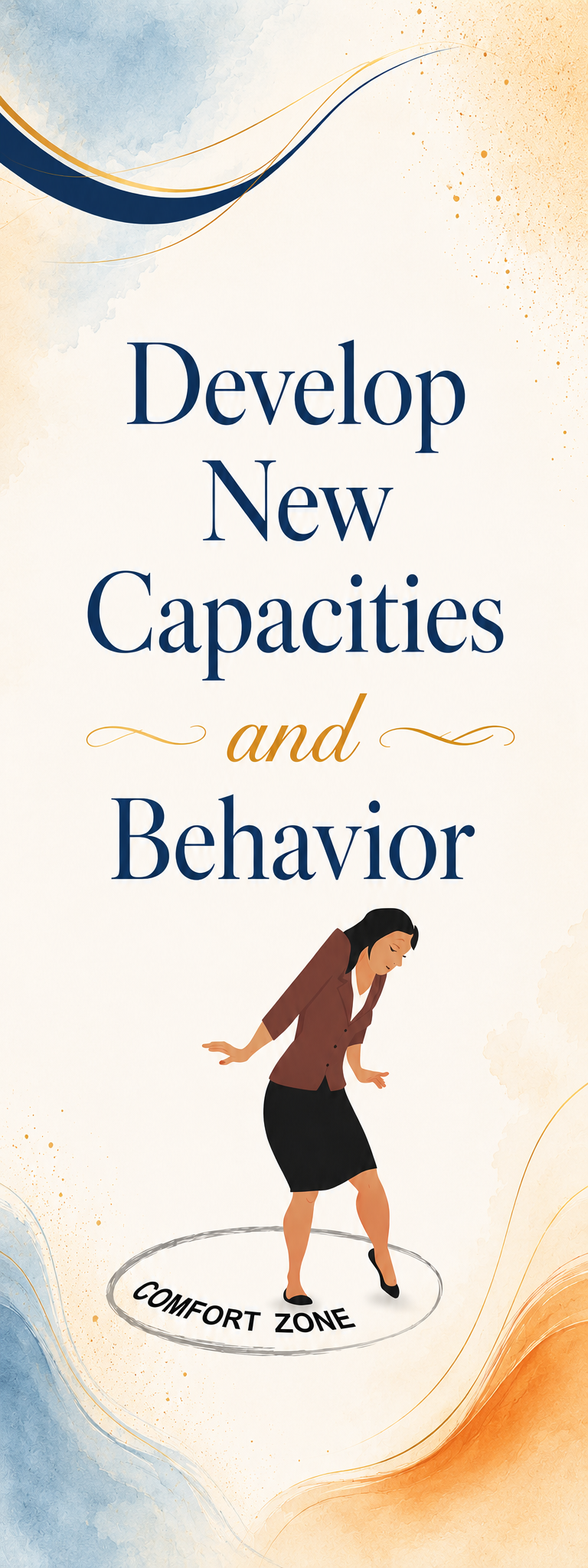
Next Steps

Work With Me
At this level, the work begins with developing awareness of yourself beneath the roles you perform. Therapeutic coaching provides a safe space to strengthen the foundational capacities that help you recognize what you feel, identify what you need, notice your limits, and develop a more stable sense of who you are.
Explore working with me to begin discovering and developing the authentic self beneath your adaptive roles.
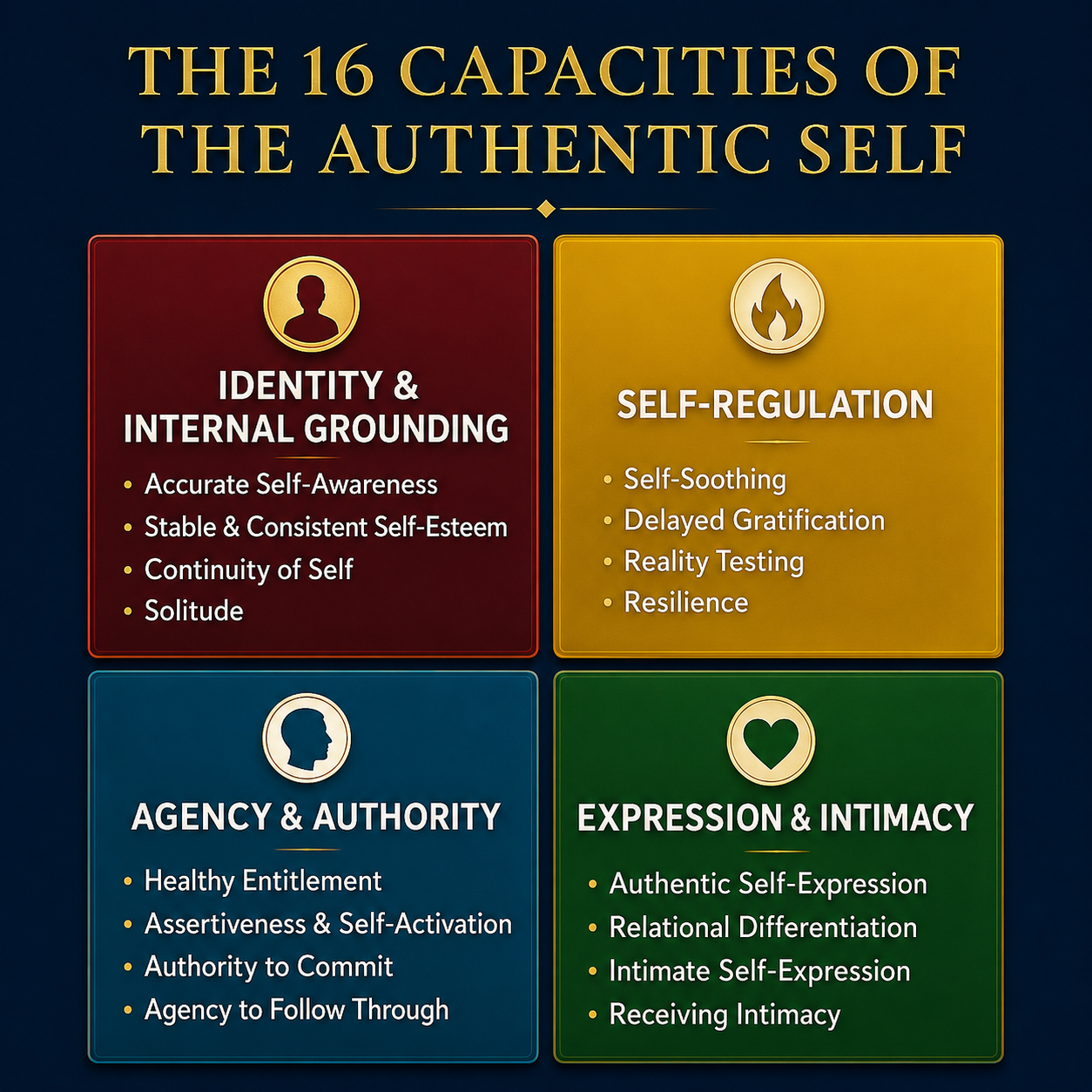
Identify Capacities
At this level, the work begins by returning to the place where the authentic self was abandoned and resuming the development of its foundational capacities. Learning to recognize the difference between the adaptive persona and the authentic self allows you to see which part of you is directing your choices and begins an ongoing path of development.
Learn about the 16 capacities of the authentic self and why self-awareness must be your starting point.

Book a Consultation
A consultation can help you understand how insecure attachment and developmental delay led to self-abandonment, and identify a safe, realistic place to begin reconnecting with yourself. Together, we can identify a realistic starting point for strengthening your authentic self without overwhelming the protective system that has kept you safe.
Book a consultation to begin developing the capacities of your authentic self.