Your Results
Wavering Authentic Level
Your score was between 24 – 47
This result suggests that you often relate from your authentic self, but your adaptive self can take over with certain people or when emotional security feels uncertain. You may know what you feel, need, and believe until someone becomes disappointed, withdrawn, critical, or difficult to read. Then you waver.
You may feel confident, direct, and grounded in some relationships, yet become more doubtful, accommodating, or reactive with someone whose tone, distance, criticism, emotional intensity, or unpredictability activates an older relationship story.
You generally know what you believe, what you need, and what feels right for you. You may be able to communicate directly, set reasonable boundaries, and recognize that other people are responsible for their own emotions. However, when someone becomes disappointed, distant, irritated, or difficult to read, your adaptive self may react as though you have done something wrong or the relationship is at risk.
In those moments, you may begin interpreting the other person’s behavior through old relationship rules of your adaptive persona. A change in tone may feel like disapproval. A need for space may feel like rejection. A disagreement may make you question whether you were wrong to speak up. Instead of staying focused on the issue, you become preoccupied with what the other person is feeling and what their reaction means about you or the relationship.
You may set a boundary and then question it when the other person reacts negatively. You may express a need clearly, then minimize it because you feel like you’re being demanding. You may agree to something you do not really want because continuing the disagreement feels more uncomfortable than giving in.
During conflict, you can temporarily lose some of your objectivity. You may know intellectually that your partner’s mood, withdrawal, or disagreement is not necessarily about you, yet your nervous system reacts as though the relationship is in danger. Your focus shifts from understanding and resolving the issue to restoring emotional safety.
Your authentic self remains accessible. Once the emotional intensity settles, you can often recognize that the adaptive self has taken over. You may see that you moved away from what was true for you, focused more on managing the other person’s response than addressing the actual problem, or reacted to an old interpretation rather than the present situation.
Relationship freedom at this level means recognizing when the adaptive self has been triggered and strengthening the ability in the present moment to helping your authentic self return to the lead.

How You Use Relationship Rules
At this level, your relationship rules do not govern all your relationships or choices. They are more likely to take over in emotionally important situations, especially with people whose behavior activates specific fears, expectations, or old relationship stories.
When your adaptive self is triggered, your rules often appear as “shoulds.” You may think, “They shouldn’t be upset with me,” “They should understand what I meant,” or “I should explain myself so they don’t misunderstand me.” These shoulds can make your interpretation feel like fact and pull your attention away from what is actually happening.
You may then overexplain, apologize too quickly, soften your position, or try to restore harmony before the real issue has been addressed. Once you feel more settled, you recognize that the rule was trying to protect you from rejection, criticism, conflict, or emotional disconnection.

Your answers suggest that your foundational capacities are developed but can become unsteady under pressure. Accurate self-awareness may be available until anxiety draws your attention away from yourself and toward the other person’s tone, mood, or approval.
Stable self-esteem may also require strengthening. You may generally feel good about yourself, yet criticism, distance, or another person’s displeasure can still cause you to question your value or judge your behavior more harshly than the situation warrants.
Continuity of self is another important capacity at this level. You may know who you are, but temporarily adjust your opinions, needs, or position when maintaining connection feels more urgent than remaining true to yourself.
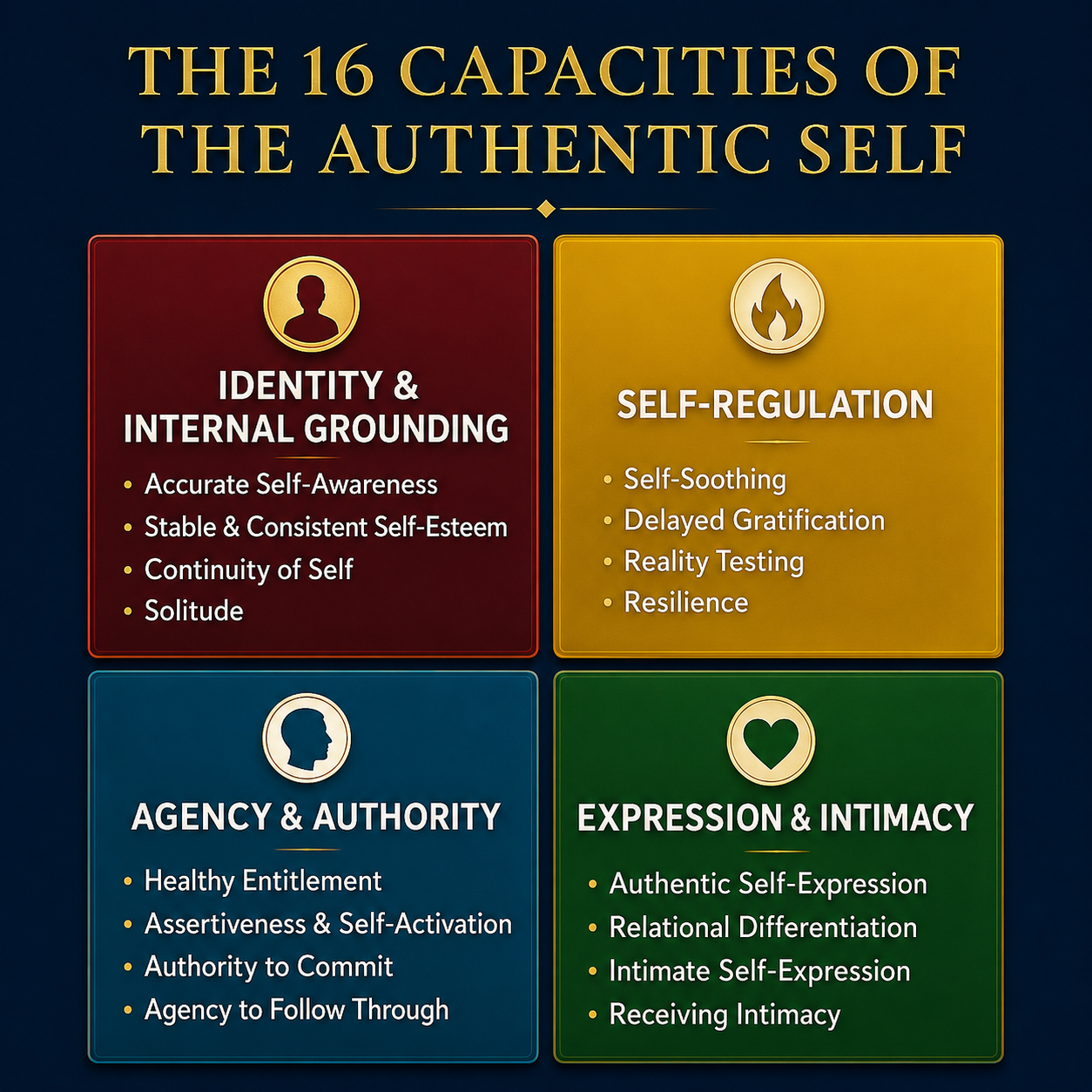
The self-regulation capacities are central to your development. Self-soothing helps you tolerate anxiety without immediately trying to make the other person feel better. Delayed gratification helps you wait for clarity rather than demanding immediate reassurance or repair. Reality testing helps you question the story your nervous system creates, and resilience allows you to remain grounded when the relationship feels uncomfortable.
Healthy entitlement, assertiveness, and relational differentiation may also need further development. These capacities help you recognize that your needs matter, express them without excessive justification, and allow another person to have a different emotional response without making it your responsibility.
Become Who You Are Meant to Be
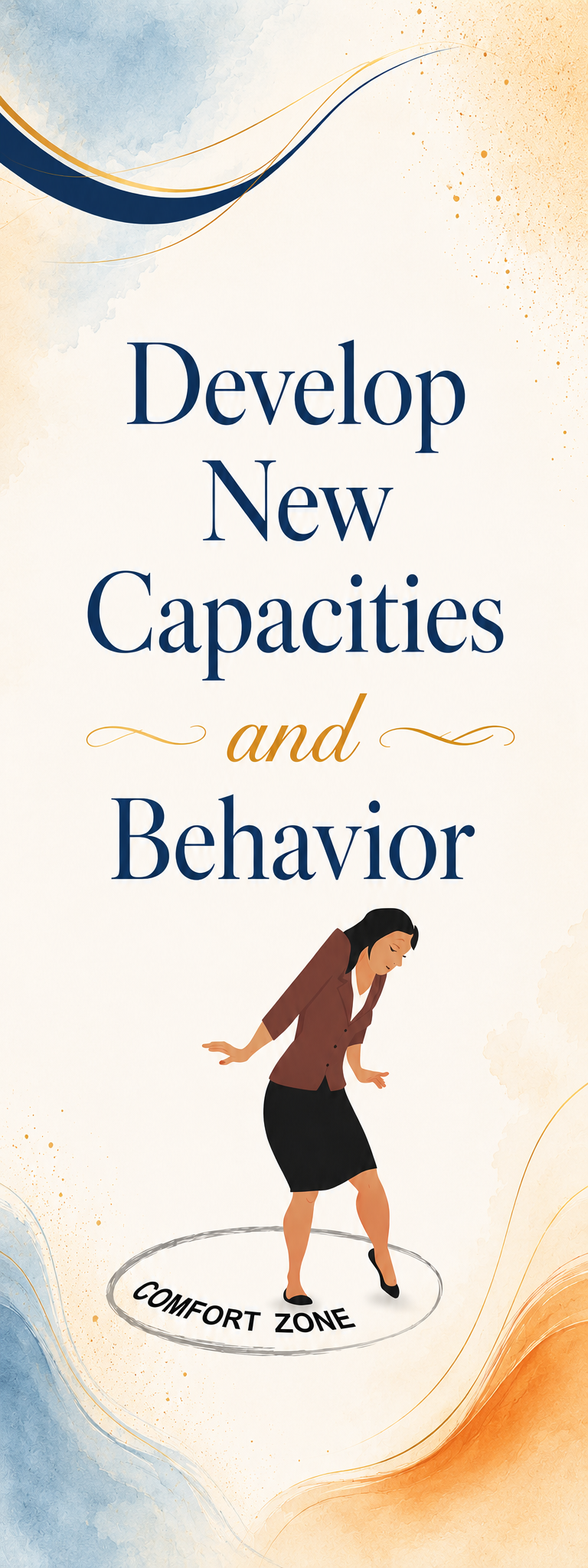
At this level, the work is about making your authentic self more dependable under pressure. You do not need to discover who you are from the beginning. You need to strengthen your ability to remain that person when someone else is unhappy, uncertain, disappointed, or unwilling to validate your position.
Notice the exact moment when your attention leaves you and moves toward managing the relationship. It may happen when you begin rehearsing an explanation, questioning whether you were too direct, or trying to work out what you need to say to restore approval.
That moment reveals which capacity needs support.
When you feel compelled to explain, practice self-soothing before speaking. When your mind creates a frightening interpretation, use reality testing to separate what you know from what you fear. When you want to retract a boundary, draw on healthy entitlement and remind yourself that another person’s disappointment does not make your limit wrong.
Developing resilience allows you to remain present while the relationship is unsettled. Strengthening relational differentiation allows you to recognize that two people can have different needs, reactions, and interpretations without either person having to surrender their reality.
As these capacities become stronger, your confidence stops rising and falling with other people’s responses. You become more able to trust your perceptions, express your needs directly, and remain emotionally connected without automatically returning to the rules that once promised approval and safety.
The question at this level is:
“Can I remain connected to myself when someone else is not pleased with me?”
Next Steps

Work With Me
At the Approval-Sensitive Level, therapeutic coaching can help you identify the moments when another person’s response causes you to question yourself, soften your truth, or move into overexplaining and appeasing. Together, we strengthen the capacities that help you remain grounded, reality-test the perceived threat, and respond from your authentic self.
Explore working with me to turn approval-sensitive self-trust into inner steadiness.
Identify Capacities
Your results can help you identify which capacities remain available when relationships feel secure and which become harder to access under pressure. Understanding the difference gives you a more precise developmental focus than simply trying to stop reacting.
Explore the 16 capacities of the Authentic Self and identify where your development needs support.

Book a Consultation
A consultation can help you clarify which relationship situations activate your self-doubt, what unconscious rules take over, and which capacities will help you remain connected to yourself without losing connection with others.
Book a consultation to strengthen your self-trust under relational pressure.