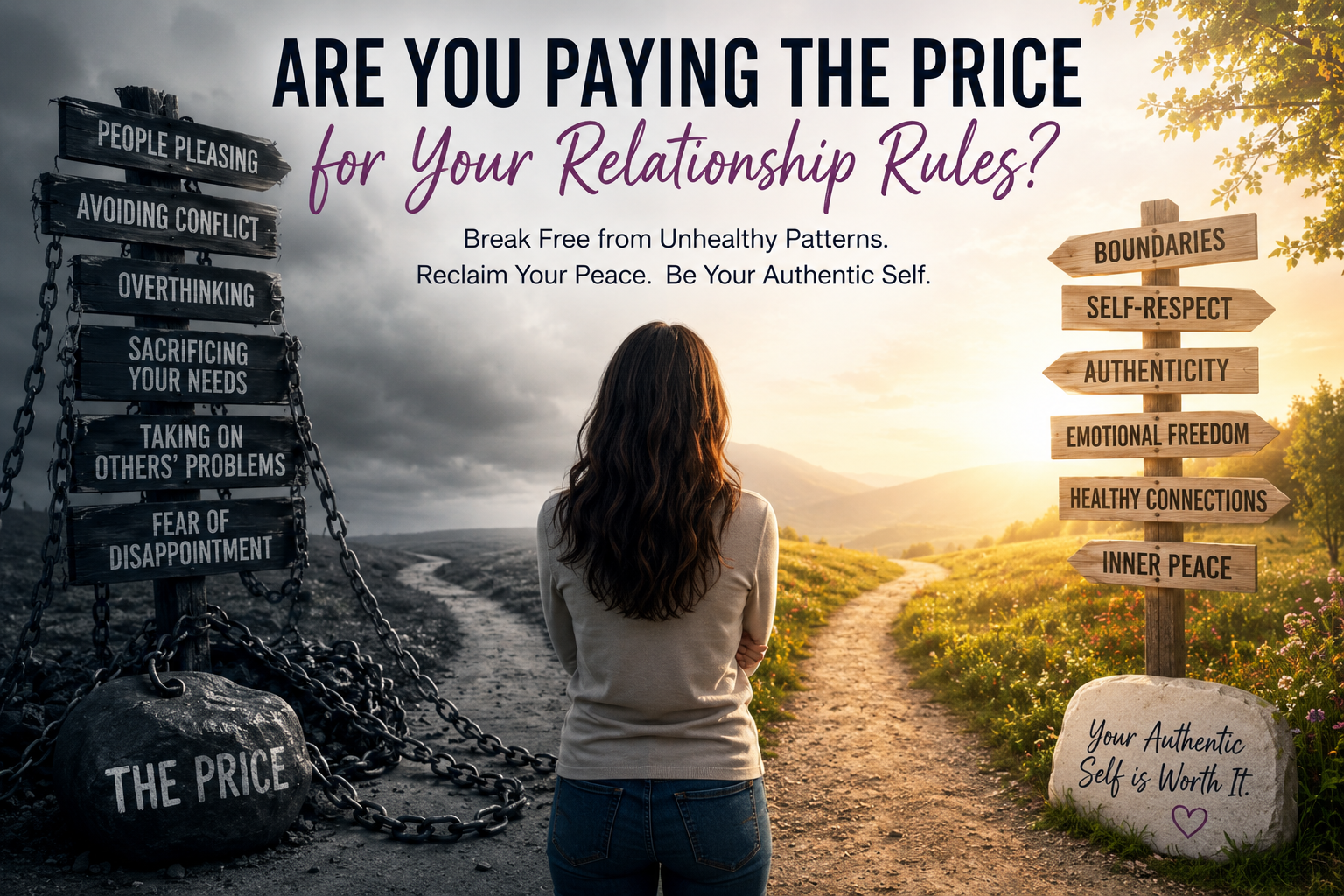
Most people never stop to ask what their relationships are costing them.
Not financially. Emotionally.
We become so accustomed to accommodating, overthinking, rescuing, avoiding conflict, walking on eggshells, or carrying the emotional weight of a relationship that it simply feels normal. We tell ourselves, “This is just who I am.”
But what if it isn’t?
What if the very relationship rules you developed to protect your relationships are quietly costing you your peace, confidence, health, and sense of self?
The Hidden Costs You Don’t See
Every relationship operates according to a set of unwritten rules.
Some are healthy. They create trust, respect, and emotional safety.
Others were formed years ago as survival strategies. They helped you gain approval, avoid rejection, reduce conflict, or feel needed. Over time, these strategies became automatic.
You may not even realize you are living by relationship rules such as:
I should keep everyone happy.
This rule helps regulate anxiety by giving you something to manage. If everyone seems okay, you can feel okay. The cost is that you become responsible for the emotional climate around you, even when other people’s feelings are not yours to fix.
I should never disappoint anyone.
This rule reduces the anxiety of conflict, rejection, or disapproval. You avoid the discomfort of letting others down by overexplaining, overgiving, or saying yes when you mean no. The cost is that your own needs, limits, and preferences disappear.
I should fix other people’s problems.
This rule creates a sense of control when someone else is struggling. Helping may feel loving, useful, or necessary, but it can also be a way to calm your own discomfort. The cost is that others do not develop their own strength, accountability, or capacity.
I should assume I have done something wrong if someone is upset.
This rule helps you make sense of emotional tension quickly. Rather than tolerating uncertainty, you turn inward and blame yourself. The cost is that you may apologize, appease, or take responsibility for things that do not belong to you.
I should put my needs last.
This rule lowers the anxiety of being seen as selfish, demanding, or difficult. It may help you feel safe in relationships because you are not asking too much. The cost is resentment, exhaustion, and a quiet disconnection from your own authentic self.
These rules don’t simply influence your relationships. They shape your identity.
Following Relationship Rules at Your Expense
Living by these relationship rules has other costs in addition to those mentioned above.
You may find yourself:
- Feeling emotionally exhausted after every interaction.
- Becoming resentful while continuing to say yes.
- Losing confidence in your own judgment.
- Feeling responsible for everyone else’s emotions.
- Staying in relationships that no longer feel healthy.
- Constantly questioning yourself after conversations.
- Struggling to know what you actually want.
The greatest cost is often the loss of yourself.
When your energy is devoted to managing other people’s feelings, there is very little left for discovering who you really are.
Why It’s So Difficult to Change
Many people believe they simply need stronger boundaries or more confidence.
Those can certainly help, but they rarely solve the real problem.
The behaviours are being driven by your adaptive persona, the part of you that learned how to gain acceptance, avoid rejection, and create emotional safety.
As long as your persona believes these rules keep you safe, it will continue to follow them, even when they are creating pain.
This is why insight alone rarely creates lasting change.
There Is Another Way
Healthy relationships do not require you to abandon yourself in order to maintain connection.
As you strengthen the capacities of your authentic self, you become more comfortable allowing others to experience disappointment, frustration, or the natural consequences of their choices. You no longer feel compelled to regulate their emotions at the expense of your own wellbeing.
Relationships become less about managing everyone else and more about showing up honestly, respectfully, and authentically.
That is where genuine intimacy begins.
If you have been wondering why the same relationship patterns keep repeating, perhaps it is time to ask a different question.
Are you paying a price for the relationship rules you’ve been living by?
Awareness is where change begins. Once you recognize the rules that have been shaping your relationships, you can begin replacing them with healthier ways of connecting that allow both you and the people you love to grow.