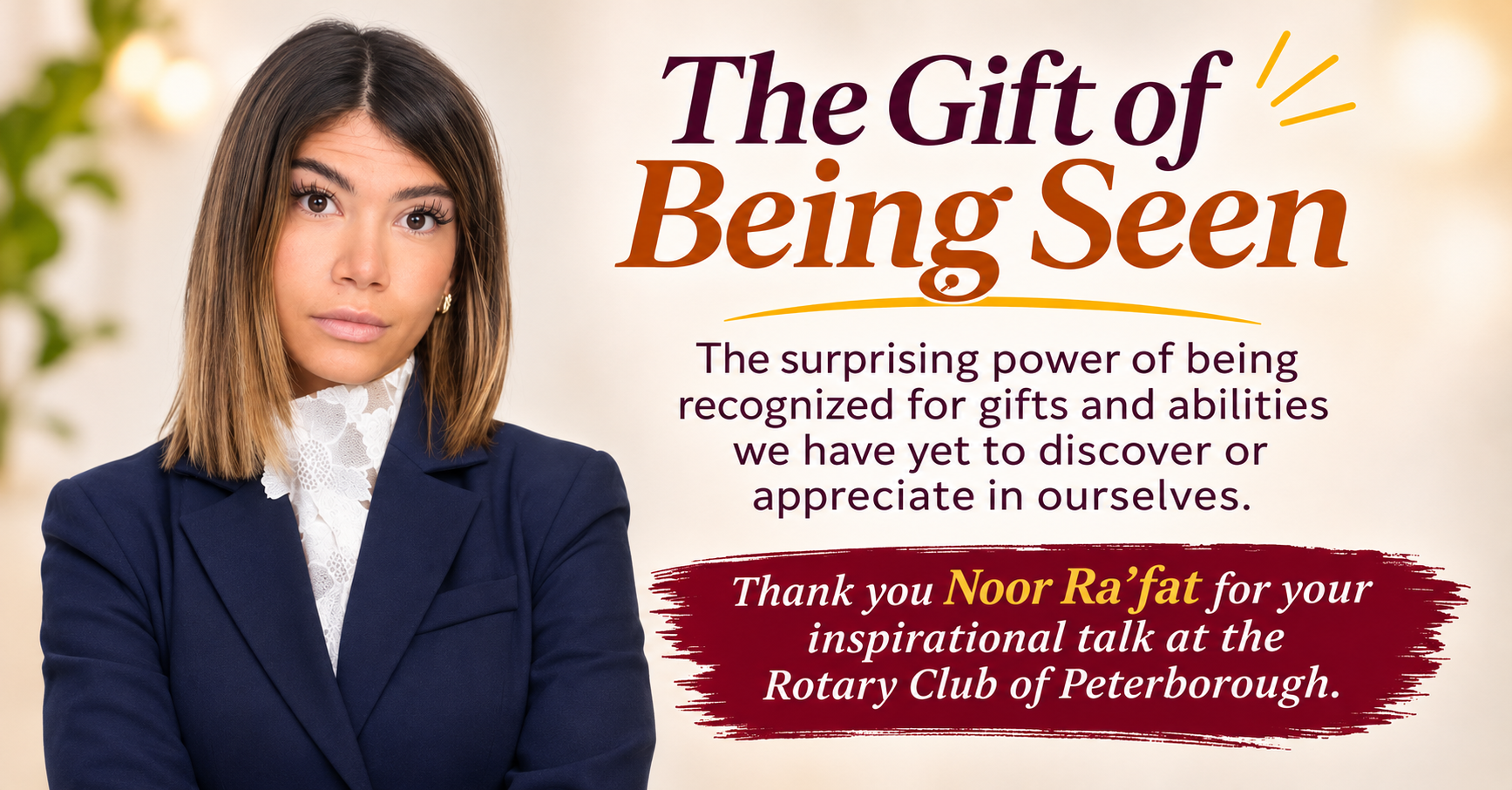
The surprising power of being recognized for gifts and abilities we have yet to discover or appreciate in ourselves.
Today, I attended a meeting of the Rotary Club of Peterborough, where our guest speaker, Noor Ra’fat, spoke about The Power of Being Seen. Her message resonated deeply with me because it connects to something I have long focused on in my writing and my work as a psychotherapist and leadership coach: the process of remembering who we are meant to be.
Noor is a well-known journalist who studied broadcast journalism at Durham College and media studies at Trent University. She has spent the past three years working with Global News Toronto. Her presentation explored the importance of being seen and validated by others, especially when we struggle to recognize our own abilities and potential.
When Others See What We Cannot See in Ourselves
One of the things that struck me about Noor’s presentation was her description of the people who encouraged her along the way. They took the time to recognize her qualities and abilities, offered encouragement, and helped her feel seen. Yet, as she pointed out, those people often had no idea about the inner conflict she was experiencing. They didn’t know about her inner struggle or the difficulty she sometimes had believing what they were telling her about herself.
I think many of us can relate to this. Someone compliments us on how we handled a difficult situation, recognizes our creativity, or tells us we have a natural talent for something. We may feel genuinely pleased, perhaps even a little surprised, because they are recognizing something we have never thought of as particularly special. But almost immediately, our negative self-talk begins questioning their assessment. We tell ourselves that they are just being nice, that anyone could have done what we did, or that they wouldn’t think so highly of us if they really knew us. Before we even have a chance to consider what they are saying, we have found a way to dismiss it.
I know how difficult it can be for people to recognize their own abilities and appreciate what makes them unique. I can’t tell you how often I’ve worked with very successful people who still struggle to see themselves the way others do. They know they can do certain things exceptionally well, yet somehow it never quite translates into what they believe about themselves.
What I find so interesting is how readily we believe the negative things we tell ourselves while questioning the positive things others tell us. We can carry around beliefs about ourselves that we developed as children, long after our experiences have shown us something quite different. Someone recognizes a talent or quality in us, and although it feels good to hear, we have a way of explaining it away. We assume they’re being kind, exaggerating, or simply don’t know us well enough. And because what they’re saying doesn’t fit with what we’ve come to believe about ourselves, we dismiss it rather than considering that perhaps they are seeing something we’ve been unable to see.
Being Seen Is Only the Beginning
This is where I see such an important connection to remembering who we are meant to be. Sometimes the first indication of an ability, a gift, or a possibility we have not recognized comes from another person. Their words can awaken something in us, creating a moment of recognition that feels surprisingly meaningful. We may feel excitement, relief, or an unexpected sense that what they are saying is true, even though it doesn’t fit the way we have learned to think about ourselves.
Yet being seen by someone else is only the beginning of that process. We also have to be willing to take in what they are telling us and allow it to influence how we understand ourselves. Otherwise, the recognition remains something that belongs to the other person, an opinion we appreciate but never quite make our own. We may remember their kindness without ever allowing ourselves to consider that the qualities they recognized are genuinely part of who we are.
Remembering who we are meant to be means being curious about why others see our strengths and unique abilities and we don’t. Instead of automatically dismissing praise, we might instead ask ourselves why it makes us uncomfortable. We can consider that what we believe about ourselves isn’t the whole story, and that some of the abilities and qualities others recognize are expressions of our authentic self that didn’t get the chance to develop.
Being open to receiving how someone sees us is easier said than done. It takes so much more than learning to accept a compliment graciously. We also need to recognize when we’re blocking it because it doesn’t align with our negative self-concept. So often, we jump in and deny it as anything special before we have had the chance to bask in the glow of positive feedback.
There is something particularly powerful about recognizing a quality in ourselves that we have spent years overlooking or dismissing. It can change what we believe is possible for us, especially when we begin to understand that the negative beliefs we have carried are not necessarily accurate descriptions of who we are. They may simply be conclusions we reached long ago, before we had the awareness or capacity to question them.
Paying Forward the Gift of Being Seen
Noor finished her presentation by reminding us that we also have the opportunity to help others feel seen. I particularly appreciated this part of her message because we often underestimate the impact of simply telling someone what we recognize and value in them. We may notice someone’s kindness, thoughtfulness, creativity, courage, or ability to make others feel comfortable without ever thinking to mention it. We assume that people must already know these things about themselves, particularly when their abilities seem so obvious to us.
But as Noor’s experience illustrated, we have no idea what is going on inside another person. Someone we see as capable and confident may struggle with significant self-doubt, while someone whose kindness or thoughtfulness seems effortless may not realize how much those qualities mean to others. A sincere observation or expression of appreciation can help someone recognize an aspect of themselves they have overlooked, discounted, or never fully understood.
I also think there is an important difference between offering generic praise and genuinely seeing another person. When we tell someone what we noticed about their behavior, how they approached a situation, or the unique contribution they made, we give them something meaningful to reflect on. We are helping them see themselves through another perspective, one that may challenge the limitations of their existing self-concept and open the door to a different understanding of who they are.
As I continue writing Remembering Who You Are Meant to Be, today’s presentation reminded me of the important role other people can play in awakening our awareness of our authentic self. Sometimes we need someone else to recognize a gift before we can recognize it ourselves. Their encouragement may be the beginning of remembering. Still, we have to be willing to receive what they reflect back to us, question the beliefs that make us dismiss it, and begin to own the qualities and abilities that are ours.
I also believe one of the most meaningful things we can do for another person is help them see something in themselves that we appreciate and recognize. We don’t always realize how much a compliment matters, even when someone is successful and appears confident. Taking the time to tell someone what we admire, appreciate, or recognize in them doesn’t cost us anything, and if we don’t, we may never know what difference our words have made, but I love the thought that simply helping someone feel seen might encourage them to begin remembering who they are meant to be.
I’m grateful to Noor for sharing her experiences and reminding us how powerful it can be to feel genuinely seen and how much we have to offer others when we take the time to really see them.