Category: Uncategorized

  • The Shadow Side of the Thinking Function

    The Shadow Side of the Thinking Function

    How the Thinking Function Becomes Psychological Armor in ESTJs, ENTJs, INTPs, and ISTPs

    It’s not unusual for those who prefer the Thinking function to analyze a problem from an objective, logical distance to avoid the discomfort of a messy emotional conversation or fixing a broken process at work because you feel personally responsible for preventing everyone else’s operational chaos. And while some of us only use this adaptive behavior situationally, for those who prefer the Thinking function, it’s their identity.

    If your dominant mental function (based on Jung’s personality type theory, MBTI, or Striving Style) is Thinking, your natural superpower is objective analysis. You have an incredible capacity to evaluate facts, establish order, and solve complex problems with fairness and structural clarity. But there is another side to this gift. When a child grows up in an unstable or emotionally unsafe environment, that beautiful capacity for logic gets woven into the crafting of a self-protective, adaptive persona and turned into a survival strategy.

    Instead of using your Thinking function for self-actualization, you start using it for self-regulation and to meet your emotional needs.

    The Subconscious Rules of Engagement

    When we are growing up, our brains create a hidden instruction manual for maintaining psychological safety in our relationships. Its purpose is simple: keep us emotionally safe, loved, and connected to the people we depend on.

    For children who prefer the Thinking function, this manual often develops in response to chaotic, unpredictable, or emotionally neglectful environments. When their needs are overlooked or unmet, they learn to rely on logic, control, and problem-solving as their primary way of staying safe. Over time, their instruction manual fills with rules like these:

    1. “I should always maintain control of my emotions and needs.” When the emotions of others are chaotic, loud, or unpredictable, the child learns that their own needs and feelings are too much to manage. Instead of turning inward for comfort, they disconnect from themselves in order to self-regulate. Staying calm, rational, and unaffected becomes their way of coping.
    2. “I should anticipate and solve problems for others.” To a child, emotional unpredictability feels like danger. The Thinking function begins scanning for what is wrong, what might happen next, and what needs to be fixed. Organizing the external environment becomes the safest way to create a sense of security. If everything can be managed, predicted, or solved, then perhaps the child can avoid emotional chaos.
    3. “I am responsible for anticipating what could go wrong and it’s my fault if it does.” Because the child’s Thinking function develops around the belief that they should be capable of handling any problem, they begin to take responsibility for keeping everything running smoothly. When something goes wrong, their first instinct is not to hold the adults accountable. It is to turn the blame inward and think, “I should have known. Why didn’t I see this coming? How do I fix it?”

    Over time, these rules can make the Thinking function look mature, competent, composed, and highly capable on the outside, while the person inside feels burdened by responsibility, emotionally cut off, and unable to relax unless everything is under control.

    Instead of using your Thinking function for self-actualization, you start using it for self-regulation and to meet your emotional needs.

    The Two Faces of the Thinking Persona: Te & Ti

    When the Thinking function is used by the adaptive persona, it uses two distinct behavioral patterns designed to protect the self, based on whether you lead with Extraverted Thinking ($Te$) or Introverted Thinking ($Ti$).

    Persona & FunctionThe Core MotivationThe Silent Cost
    The Controller Persona
    (Extraverted Thinking Te)
    Te seeks self-regulation through insisting on continuous order and structure using the Controller Persona. Valuing external structure and organization, they meet the need to be in control by constantly monitoring and micro-regulating their environment to ensure they remain safe from emotional chaos.Loss of Intimacy: The Controller Persona causes you to lose touch with your emotions and devalue and dismiss others’ emotions. Logic and rationalization take the place of emotional intimacy, treating relationships like machines to be managed. Agency and authority are used to control oneself and others.
    The Avoider Persona
    (Introverted Thinking Ti)
    Ti regulates and manages their internal equilibrium by detaching from needs and emotions. Because it is naturally wired toward internal logic and structural analysis, the Avoider Persona meets their need to be knowledgeable by intellectualizing conflicts and withdrawing behind a wall of reason before emotions can overwhelm them.Isolation & Stagnation: The Avoider Persona seeks safety in independence and detachment, using avoidance strategies to self-regulate. By withdrawing and being emotionally unavailable, relationships are devoid of genuine connection. Discounting and dismissing emotions keeps the Avoider safe from emotional overwhelm.

    Breaking Free: Moving from Self-Protection to Self-Actualization

    Your adaptive persona is not your true identity. It is an intelligent survival strategy your childhood brain created by using your natural strengths to keep you safe. But you are no longer a child, and you no longer need to organize your relationships around self-protection.

    To step out of the self-protective roles of the Controller or the Avoider, you need to begin rewriting the internal rules that once kept you safe but now keep you guarded, distant, or overresponsible.

    Rule Example: Te Controller Persona

    Adaptive Persona Rule: Self-Protection
    “I should control my emotions, needs, environment, and the behavior of others so I can stay safe from chaos, vulnerability, and emotional unpredictability.”

    Authentic Self Rule: Self-Actualization
    “My safety is internal. I can let go of control, feel my emotions, express my needs, and trust myself to stay grounded, even when things are messy, uncertain, or emotionally uncomfortable.”

    Rule Example: Ti Avoider Persona

    Adaptive Persona Rule: Self-Protection
    “I should shut out anything that challenges my internal worldview and use detached analysis as a shield against emotional chaos, dependency, or vulnerability.”

    Authentic Self Rule: Self-Actualization
    “I am capable of tolerating different perspectives, emotional discomfort, and uncertainty. I can step out from behind my intellectual defenses and allow myself to experience my own emotions and the emotions of others without being overwhelmed by them.”

    The goal is not to stop being logical. It is not to stop solving problems, thinking clearly, or seeing what others miss. The goal is to separate your intellect from your survival system.

    When your Thinking function is no longer being used to manage fear, control uncertainty, or protect you from vulnerability, it becomes available for its true purpose. It helps you make sound decisions, create structure, solve real problems, and build relationships that are honest, respectful, and genuinely collaborative.

    This is what self-actualization requires. You stop using your best gift as psychological armor and begin using it in service of truth, connection, and emotional maturity.

    More Resources on the Thinking Function

    Explore the article and video series to learn how the Thinking function can become psychological armour and shape self-protective patterns in relationships, leadership, and everyday life

    Are you ready to stop playing defence and decode the hidden rules running your life?

    Subscribe and stay tuned for the upcoming podcast series Your MBTI Personality Type Is Not the Whole Story: How Jungian Functions and Emotional Needs Shape the Adaptive Persona. A 10-Week Podcast Series with Dr. Anne Dranitsaris coming in October 2026.

    Learn more about how your personality type shapes your protective armor in my latest book, Are Your Relationship Rules Ruining Your Happiness?, or check out the full breakdown in my recent article on How Jungian Functions Shape Your Adaptive Persona.

  • The Shadow Side of the Feeling Function

    The Shadow Side of the Feeling Function

    We’ve all been there: swallowing your own opinion to keep the peace at dinner or taking on extra projects at work because you feel personally responsible for everyone else’s stress levels. And while some of us only use this adaptive behavior situationally, for those who prefer the Feeling function, it’s their identity.

    If your dominant mental function (based on Jung’s personality type theory, MBTI or Striving Style) is Feeling, your natural superpower is empathy. You have an incredible capacity to read the emotional room, cultivate harmony, and maintain the vital bonds that connect us. But there is another side to this gift. When a child grows up in an unstable or emotionally unsafe environment, that beautiful capacity for connection gets woven into the crafting of a self-protective, adaptive persona and turned into a survival strategy.

    Instead of using your Feeling function for self-actualization, you start using it for self-regulation and to meet your emotional needs.

    The Subconscious Rules of Engagement

    When we are growing up, our brains write a hidden “instruction manual” for relationships. The main goal of this manual is simple: keep us safe, loved, and connected to the people we depend on.

    For people who naturally navigate the world through their feeling function, deciding what is good and what is bad, that instruction manual usually has three golden rules:

    • “I must be liked and approved of.” To a child, disagreement or disapproval feels like danger. The brain learns that matching what other people want is the absolute safest way to stay connected.
    • “I am the thermostat for the room.” These kids are hyper-aware of the emotional “temperature” around them. If a parent or friend is sad, angry, or tense, the child’s brain goes on high alert and tries to fix the vibe to restore a sense of safety.
    • “If my parents are upset, it’s 100% my fault.” Because the feeling function decides based on valence (am I valuable to the other person) and self-referral (how does what is going on have to do with me), they take on all the responsibility for keeping the connection and the peace.  If something goes wrong, their first instinct isn’t to blame the other person; it’s to ask, “What did I do wrong, and how do I fix it?”

    Essentially, the brain learns to trade away its own comfort to keep the peace. While that copes well in childhood, it can lead to carrying the weight of the world in adult relationships.

    The Two Faces of the Feeling Persona: Fi vs. Fe

    When the Feeling function is used by the adaptive persona, it uses two distinct behavioral patterns designed to protect the self, based on whether you lead with Introverted Feeling () or Extraverted Feeling ().

    Persona & FunctionThe Core MotivationThe Silent Cost
    The Pleaser

    (Introverted Feeling )
    Chases continuous approval. Because  values deep personal alignment and acceptance, the Pleaser Persona constantly monitors how others feel about them to ensure they are safe from rejection.Loss of Identity: You completely lose touch with your own true inner values, preferences, and desires just to keep the peace and maintain approval. Agency and authority are in others.
    The Caretaker

    (Extraverted Feeling )
    Manages the emotions and needs of others. Because it is naturally wired toward external harmony and everyone in it, the Caretaker Persona anticipates and meets everyone else’s needs before they even ask.Burnout & Resentment: You assume 100% responsibility for the emotional well-being of others, leaving your own tank completely empty until bitterness sets in. Caretaking others regulates self-esteem.

    Breaking Free: Moving from Self-Protection to Self-Actualization

    Your adaptive persona isn’t your true identity. It’s just an incredibly intelligent strategy your childhood brain designed using your natural strengths. But you are no longer a child, and you no longer need to play defense.

    To stop playing these roles and step into your true self, you have to rewrite your internal rules:

    Old Rule ( Pleaser): I must adapt who I am to ensure I am always approved of and accepted.

    New Rule (Self-Actualization): My worth is inherent. It is safe for me to hold my own values and be my authentic self, even if it doesn’t please everyone.

    Old Rule ( Caretaker): I am responsible for managing the emotional climate and fixing how everyone else feels.

    New Rule ( Self-Actualization): I am responsible for my own emotions, and others are responsible for theirs. True connection allows space for others to sit with their own discomfort.

    The goal isn’t to stop being empathetic or to stop caring for people. It is to detach your empathy from your survival. When you step out of the defensive roles of the Pleaser or the Caretaker, you finally free up your Feeling function to do what it was always meant to do: build deeply authentic, mutually supportive, and genuinely harmonious connections.

    Are you ready to stop playing defense and decode the hidden rules running your life?

    Dive deeper into how your personality type shapes your protective armor in my latest book, Are Your Relationship Rules Ruining Your Happiness?, or check out the full breakdown in my recent article on How Jungian Functions Shape Your Adaptive Persona.

  • How Jungian Functions (MBTI) and Striving Styles Emotional Needs Shape Your Adaptive Persona

    How Jungian Functions (MBTI) and Striving Styles Emotional Needs Shape Your Adaptive Persona

    Nature Meets Nurture: How the Brain Chooses Self-Protective Strategies

    Why do two children from the same chaotic home build completely different relationships as adults?

    One grows up to become agreeable, accommodating, and terrified of disappointing anyone. Another becomes controlled, hyper-rational, and difficult to reach emotionally. A third learns to read every micro-shift in tone, mood, and physical expression. The fourth becomes driven, impressive, and determined never to be seen as weak, needy, or ordinary.

    They may have lived in the same family, under the exact same roof, navigating the same instability, emotional tension, sharp criticism, or lack of reliable comfort. Yet, the relationship blueprints they construct as adults look completely different.

    This is the exact point where nature meets nurture.

    Attachment Explains the Wound, But Not the Whole Pattern

    Attachment theory does a brilliant job of explaining how our earliest bonds shape our fundamental sense of safety, closeness, trust, and emotional regulation. But attachment alone cannot fully explain why one child becomes a Pleaser while their sibling becomes a Controller, or why one learns to rescue while another learns to completely withdraw.

    The emotional environment triggers the survival instinct, but the child’s natural cognitive wiring determines the precise shape that survival instinct takes.

    This is where Jung’s Personality Type Theory (MBTI) and Striving Styles provide the missing piece of the puzzle.

    While MBTI explains the specific brain functions a child naturally relies on to process information and make choices, Striving Styles highlights the core emotional needs driving that behavior. When early attachment is secure, these natural functions and emotional needs beautifully support the development of our authentic self. The child feels free to think, explore, express, separate, and grow.

    But when connection feels shaky or conditional, those exact same functions and needs are recruited into psychological survival. They become the building blocks of the adaptive persona.

    What Is the Adaptive Persona?

    The adaptive persona is who we had to become to stay connected and self-regulate during our formative years. It is an intelligent, highly sophisticated armor crafted by our self-protective system to shelter the vulnerable authentic self.

    This persona contains a suite of automated relationship rules designed to reduce anxiety, preserve attachment, avoid shame, and guard against rejection, abandonment, or emotional overwhelm. It doesn’t develop randomly. It forms through repeated emotional experiences where a child notices what brings closeness, what causes a parent to withdraw, which feelings are safe to show, and which lead to criticism.

    From these moments, the child draws subconscious conclusions. However, those conclusions are heavily filtered through the specific lens of the child’s dominant brain function.

    How the Feeling Function Adapts

    A child with a dominant Feeling function is naturally oriented toward emotional harmony, shared values, and the interpersonal climate of the home. In a secure environment, this wiring develops into deep empathy, warmth, and genuine relational attunement. However, when attachment feels unpredictable, this sensitivity is forced into survival mode, and the child becomes hyper-responsible for the emotional states of the adults around them.

    The self-protective Feeling function typically recruits two primary adaptive personas: the Pleaser Persona (associated with Introverted Feeling or the Artist Striving Style) and the Caretaker Persona (associated with Extraverted Feeling or the Socializer Striving Style).

    • The Pleaser Persona internalizes the core rule: “I should not upset anyone.” They learn that having personal boundaries or opposing a parent risks catastrophic disconnection, so they adapt by becoming deeply compliant and agreeable.
    • The Caretaker Persona adopts the rule: “I should carry what others need.” They manage their relational anxiety by taking pride in being indispensable, learning to suppress their own desires to ease the burdens of those around them.

    When the Feeling function is weaponized for self-protection, its ultimate cost is self-erasure. The child learns to equate love with compliance, establishing an adult pattern where they routinely sacrifice their own identity and opinions to maintain a fragile peace.

    How the Thinking Function Adapts

    A child with a dominant Thinking function naturally processes the world through logic, cause-and-effect, order, and objective analysis. In a healthy, supportive environment, this function develops into excellent problem-solving, cognitive clarity, and strong, protective boundaries. But when the family environment becomes emotionally chaotic or unsafe, the Thinking function is deployed to build an intellectual fortress against vulnerability.

    The self-protective Thinking function generally operationalizes into two distinct adaptive personas: the Controller Persona (associated with Extraverted Thinking or the Leader Striving Style) and the Avoider Persona (associated with Introverted Thinking or the Intellectual Striving Style).

    • The Controller Persona operates under the rigid rule: “I should stay in charge so nothing falls apart.” They attempt to neutralize emotional unpredictability by managing schedules, micro-regulating details, and forcing order onto their environment.
    • The Avoider Persona relies on the internal rule: “I should keep my distance so I do not get overwhelmed.” They conclude that emotional expressions are inherently dangerous and messy, adapting by shutting down, withdrawing, and remaining fiercely self-reliant.

    When the Thinking function is recruited into survival, logic is used to bypass genuine feeling. In adulthood, this manifests as a profound discomfort with emotional intimacy, where explaining a problem from a cold distance takes the place of actually experiencing connection.

    How the Sensing Function Adapts

    A child with a dominant Sensing function is acutely attuned to the present moment, relying heavily on tangible, concrete, and observable data. In a secure home, this translates into a beautifully grounded, practical, and responsive approach to life. However, when raised in an unstable or volatile atmosphere, this concrete focus transforms into chronic hyper-vigilance, turning the child into a radar system scanning for environmental threats.

    The self-protective Sensing function primarily molds itself into two adaptive personas: the Rescuer Persona (associated with Extraverted Sensing or the Adventurer Striving Style) and the Martyr Persona (associated with Introverted Sensing or the Stabilizer Striving Style).

    • The Rescuer Persona lives by the urgent rule: “I should fix what hurts right now.” They track immediate physical cues—like a slammed door or a heavy sigh—and jump into action to solve the tangible crisis before the tension explodes.
    • The Martyr Persona relies on the long-term historical rule: “I should endure and suffer to prove my loyalty.” They log every practical detail of what has been sacrificed, carrying the physical and logistical load of the family as a concrete testament to their worth.

    When the Sensing function is trapped in a defensive loop, the child is never allowed to simply exist in the present. As adults, they are perpetually tracking facial expressions, body language, and minor shifts in routine, viewing a partner’s bad mood not as data but as an immediate danger to be managed.

    How the Intuitive Function Adapts

    A child with a dominant Intuitive function naturally looks beyond the immediate surface, automatically reading underlying patterns, tracking themes over time, and projecting future possibilities. In a nurturing setting, this function blossoms into rich imagination, foresight, and profound meaning-making. But when forced to survive an insecure attachment system, Intuition morphs into severe, tracking anticipatory anxiety.

    The self-protective Intuitive function typically channels its energy into two major adaptive personas: the Performer Persona (associated with Extraverted Intuition or the Performer Striving Style) and the Rationalizer Persona (associated with Introverted Intuition or the Visionary Striving Style).

    • The Performer Persona is driven by the anticipatory rule: “I should be extraordinary so I am never rejected.” They imagine future abandonment and attempt to outrun it by crafting an impeccable, dazzling image that makes them impossible to criticize.
    • The Rationalizer Persona utilizes the rule: “I should interpret the pattern so it cannot surprise or hurt me.” They live ahead of the moment, obsessively contextualizing their partner’s behavior within massive psychological or philosophical frameworks to avoid the raw impact of a current wound.

    When the Intuitive function is weaponized for survival, the child completely stops living in the actual present. Adult relationship dynamics become a game of chess, where the individual is constantly anticipating rejection before it happens, adjusting their behavior to dodge threats that haven’t even arrived.

    Where Striving Styles Emotional Needs Fit

    Where Striving Styles Emotional Needs Enter the Pattern

    Striving Styles adds a vital layer to this map because it identifies the exact essential emotional need the child’s brain is trying to safeguard. These needs are entirely healthy in themselves. However, when attachment is insecure, these needs are put in the service of the adaptive persona, shifting from pathways of growth into rigid survival strategies:

    • The need to be Creative is put in the service of the adaptive persona through Pleasing, where the person shapeshifts to fit what they imagine others want.
    • The need to be Connected is put in the service of the adaptive persona through Caretaking, where the person preserves closeness by becoming needed and carrying what belongs to others.
    • The need to be Secure is put in the service of the adaptive persona through Self-Sacrifice (enduring mistreatment to preserve the bond).
    • The need to be Recognized is put in the service of the adaptive persona through Performance (achieving exceptional goals to avoid abandonment).
    • The need to be Perceptive is put in the service of the adaptive persona through Rationalizing (using insight and objective analysis to rise above the raw pain of a wound).
    • The need to be In Control is put in the service of the adaptive persona through Controlling (managing emotions to avoid anxiety).
    • The need to be Knowledgeable is put in the service of the adaptive persona through Distancing (observing emotions from a safe intellectual distance).
    • The need to be Spontaneous is put in the service of the adaptive persona through Rescuing (fixing the partner’s life to validate one’s worth).

    Develop Your Authentic Self

    Your adaptive persona is not your true identity. It is simply the highly intelligent strategy your childhood brain designed when connection didn’t feel secure enough for your authentic self to safely show up.

    Determining your dominant function and predominant needs by taking the Striving Styles Personality Assessment. It gives you both your four-letter MBTI code and Striving Style. You can finally decode the hidden logic behind your adult relationship patterns and stop asking why your relationships feel so exhausting.

    Ready to uncover the hidden beliefs and rules running your relationship?

    Get your copy of Are Your Relationship Rules Ruining Your Happiness? today and discover how to transition from self-protection to developing the capacities of your authentic self.

  • When Caring Isn’t Really Caring

    When Caring Isn’t Really Caring

    Why the Need to Rescue Others May Be About Regulating Your Own Anxiety

    One of the most difficult conversations I have with clients is helping them recognize that what they have always believed to be caring may not be caring at all.

    That statement usually catches them off guard. They know they care deeply about the people in their lives. They are the ones others rely on. They remember birthdays, organize family gatherings, smooth over disagreements, and step in whenever someone is struggling. If a friend is overwhelmed, they offer help before it is requested. If a colleague drops the ball, they quietly make sure the work gets done. If an adult child is making poor financial decisions, they provide money, advice, or both.

    When I ask why they do these things, the answer is almost always the same.

    “Because I care.”

    I never doubt the sincerity of that response. What I question is whether it tells the whole story.

    Over the years, I have come to believe that many of the behaviors we describe as caring are not driven primarily by compassion. They are driven by anxiety. More specifically, they are driven by our adaptive persona’s need to restore emotional equilibrium when someone else’s behavior creates discomfort within us.

    That is a very different motivation.

    The Adaptive Persona Cannot Tolerate Uncertainty

    The adaptive persona develops early in life. It is not who we are. It is who we become when we discover that certain ways of behaving reduce emotional pain and increase our sense of safety.

    For one child, safety comes from achieving. For another, it comes from becoming invisible and avoiding conflict. For someone else, it comes from becoming indispensable by taking care of everyone around them.

    None of these strategies is consciously chosen. They are adaptive responses to the emotional environment in which we are raised. Over time, they become automatic, and because they have been successful in reducing anxiety, we mistake them for our personality.

    If your adaptive persona developed around responsibility, your emotional stability gradually becomes linked to how well other people are functioning. When they are managing their lives well, you feel relatively calm. When they are not, your own internal equilibrium begins to shift.

    This is why another person’s poor decision, missed deadline, financial difficulty, unhealthy relationship, or emotional distress can feel surprisingly difficult to tolerate. Their struggle does not simply belong to them. It begins to feel as though it belongs to you.

    Without realizing it, your adaptive persona has reached a simple conclusion: if I can get everything back under control, I will feel better.

    Rescuing Regulates the Rescuer

    Most rescuers believe they are responding to another person’s needs. Often they are responding to their own anxiety.

    That distinction is subtle, but profoundly important.

    Imagine your adult daughter calls to tell you she has overspent again and cannot pay her bills. You immediately begin thinking of solutions. Perhaps you offer her money. Perhaps you can reorganize your own finances so she can get through another month. Perhaps you call creditors on her behalf or begin searching for ways to solve the problem.

    The obvious explanation is that you are trying to help your daughter. But suppose you paused for a moment and asked yourself a different question.

    “What happens inside me if I don’t rescue her?”

    For many people, the answer has nothing to do with the daughter.

    “I won’t be able to stop worrying.”

    “I’ll feel guilty.”

    “I’ll be anxious.”

    “I won’t be able to sleep.”

    “I’ll feel like a bad parent.”

    Notice where the distress is located.

    It is not only in your daughter. It is in you.

    Helping becomes the quickest way to reduce your own emotional discomfort. Once you have done something, your anxiety settles. The problem feels more manageable. You feel useful again.

    From the perspective of the adaptive persona, the strategy has worked beautifully.

    Unfortunately, it has also interrupted your daughter’s opportunity to experience the very process that develops maturity.

    Growth Requires Struggle

    We live in a culture that often equates love with protection. We assume that caring means preventing pain whenever possible. Parents protect children from disappointment. Leaders solve problems for employees. Partners compensate for one another’s weaknesses. Friends rush to remove discomfort before it has the chance to unfold.

    The intention is loving.

    The outcome is often the opposite.

    Human beings do not develop confidence because life is made easy for them. Confidence develops by discovering that one can solve difficult problems.

    Accountability develops when people experience the consequences of their own choices.

    Resilience develops by moving through disappointment rather than avoiding it.

    Every meaningful capacity of the authentic self is forged through experiences that require us to tolerate uncertainty, frustration, failure, and discomfort.

    When we continually remove those experiences from another person’s life, we unintentionally interfere with their development.

    This is why rescuing is so seductive.

    It reduces our anxiety while simultaneously allowing us to believe we are being loving. Yet what appears compassionate in the moment may actually postpone another person’s growth.

    The Difference Between Caring and Carrying

    Authentic caring does not mean becoming indifferent to another person’s suffering. Nor does it mean refusing to help when help is genuinely needed.

    The difference lies in whose anxiety is being managed.

    Authentic caring asks, “What does this person need in order to grow?”

    The adaptive persona asks, “What do I need to do so I can stop feeling uncomfortable?”

    Those are very different questions. One serves development. The other serves anxiety reduction.

    Sometimes authentic caring means listening instead of solving. Sometimes it means allowing natural consequences to unfold. Sometimes it means expressing confidence in another person’s ability to figure things out instead of stepping in to do it for them.

    That is far more difficult than rescuing because it requires us to tolerate our own discomfort while someone else struggles.

    The adaptive persona experiences that as dangerous.

    The authentic self understands that struggle is often the very path through which people discover their own strength.

    Learning to Let Go

    If you recognize yourself in this article, resist the temptation to judge yourself. The adaptive persona developed for good reasons. At one point in your life, taking responsibility for everyone else probably did increase your sense of safety. It may even have protected important relationships.

    But strategies that help us survive childhood often become obstacles to thriving as adults.

    The next time you feel compelled to organize, rescue, remind, or take responsibility for someone else’s life, pause before acting.

    Instead of asking, “How can I fix this?”

    Ask yourself, “Whose anxiety am I trying to reduce?”

    The answer may surprise you.

    Real caring is not measured by how quickly we remove another person’s struggle. It is measured by our willingness to remain present, supportive, and compassionate while trusting that they have the capacity to grow through it.

    That is not abandoning them.

    It is believing in them.

    And perhaps, for the first time, it is also believing that you no longer need your adaptive persona to keep everyone else’s world in order before you can feel at peace in your own.

    Take the Next Step

    If you found yourself recognizing your own patterns as you read this article, don’t stop there.

    Understanding your adaptive persona is only the beginning. Lasting change comes from recognizing the unconscious relationship rules that have guided your decisions for years and developing the capacities of your authentic self.

    Start by taking my free Relationship Rules Quiz to uncover the hidden beliefs influencing your relationships. Then download my free guide, The 16 Capacities of the Authentic Self, to begin strengthening the qualities that support healthier relationships, greater emotional freedom, and a more authentic way of living.

    If you’re ready to explore these ideas more deeply, you’ll find them fully developed in my book, Are Your Relationship Rules Ruining Your Happiness?

  • Has Struggle Become Your Identity?

    Has Struggle Become Your Identity?

    Time to stop glorifying struggle and start building relationship capacities.

    Somewhere along the way, struggle became a status symbol. We speak about our anxiety keeping us up at night, our trauma, and pushing through as if endurance itself were proof of growth. It is not. It is often a sign that your nervous system is stuck in hypervigilance, while the part of you that needs care waits in the hallway. The more we glorify struggle, the more we postpone development. Not the flashy kind of change, but the real work of building the capacity to live as your Authentic Self.

    Struggle is not interesting when it becomes a personality. It is the same story told at a higher volume. You brace. You try harder. You get praised for your pain, for having been a victim. Inside, not much moves. If you were taught that belonging is earned through effort, you will keep performing even when the performance costs you your voice. The problem is not that you are weak. The problem is that your survival habits are still running the show and calling it struggle.

    Yet this type of struggle has no beginning and no ending. It is a regulatory feedback loop that you created to keep you safe. While you struggle, you feel like you are doing something.

    We talk about our anxiety keeping us up at night, our trauma, our overthinking, and how hard we push through, as if endurance itself equals evolution. “It is hard” becomes the identity, and “I am trying” becomes the badge of honor.

    But trying hard does not always mean you are developing. Sometimes it means your brain is stuck in hypervigilance, and the part of you that needs care and development is still waiting for permission to emerge. Struggle can be real and seductive. While you struggle, you feel like you are doing something. It’s the same as when you worry, catastrophize, or become anxious about things that haven’t happened yet. You brace, you push, you endure. It looks like you are doing the work, yet it often keeps the deeper work postponed.

    When Struggle Becomes a Persona

    There is a point where struggle stops being something you do and becomes how you identify yourself. The story stays the same, just told with more intensity. You carry more. You explain more. You justify more. You get praised for surviving all of the hard things in your life, for being the one who can handle it, for being the one who keeps going. It is easy to mistake that praise for approval and recognition, and so you keep it going.

    The Developmental Delay No One Talks About

    When core childhood needs are not met, particularly psychological safety, mirroring, belonging, acceptance, and recognition, something very specific happens inside the psyche. The Authentic Self does not disappear, but it becomes less available. It steps back. In its place, you build a Persona that knows how to manage others by changing your behavior. That Persona becomes skilled at coping.

    This is where many adults are stuck in their relationships. They become high-functioning, capable, and outwardly successful, yet inwardly they remain insecure, overly vigilant, and unusually sensitive to relational threat. Their relationship pattern has been organized around survival. That is what a developmental delay looks like. It is not a flaw. It is not a weakness. It is simply the result of capacities that were never fully developed because the conditions for their development were not consistently present.

    The Shift That Changes Everything

    There is a turning point that I watch for. It happens when someone stops asking, “Why is this so hard?” and begins asking, “What capacity is missing here?” That single question moves you out of the theater of struggle and into the work of development. It brings you back to your personal agency. It brings you back to choice. It brings you back to the possibility that your self-protective behaviors are not your identity, and that the development of relationship capacities is possible at any age.

    This is exactly why I have written about the ten relationship capacities in my book, Are Your Relationship Rules Ruining Your Happiness? They are not “tips.” They are not personality traits. They are developmental capacities that allow love to become sustainable, conflict to become workable, and intimacy to become safe. When these capacities are weak, we default to familiar roles, such as martyrdom, victimhood, overfunctioning, perfectionism, or quiet resentment. When these capacities strengthen, the Persona loses its grip because you no longer need it to survive the ordinary tension of relationships.

    Your Challenge This Week

    Here is the challenge I want you to take seriously. The next time you find yourself telling a struggle story, pause before you finish it. Notice what you are trying to prove. Notice what you are hoping the story will earn you. Then ask yourself what development would look like right there, in that exact moment, in that exact pattern. If you brought agency, not disempowerment, to the conversation.

    If your default is overexplaining, development may be learning to speak plainly. If your default is overgiving, development may be learning to set a limit without guilt. If your default is withdrawing, development may be learning to stay present and name what you feel. If your default is escalating, development may be learning to regulate before you respond. Struggle will always have a storyline. Capacity has a direction.

    Where the Authentic Self Actually Shows Up

    The authentic self does not arrive with a dramatic announcement. It shows up quietly, in ordinary moments, when you stop performing and start relating from truth. It shows up when you do not abandon yourself to keep the peace. It shows up when you tolerate discomfort without turning it into a crisis. It shows up when you let your needs into the room early, rather than waiting until they come out sideways.

    That is development. Not the glamour of surviving. The dignity of becoming.

  • Why More Self-Improvement Does Not Always Lead to Growth

    Why More Self-Improvement Does Not Always Lead to Growth

    Have you ever looked back and thought, “I have done so much work. Why do I still feel stuck in the same place?”

    You have read the books. Taken the courses. Listened to the podcasts. Followed the teachers, therapists, coaches, and spiritual leaders who offered language for what you were experiencing. Maybe you have gathered enormous insight into your patterns, your wounds, your relationship history, and your emotional reactions.

    And still, something in you may feel untouched.

    This is one of the most confusing parts of personal growth. From the outside, it can look as though you are doing everything right. You are learning. Reflecting. Trying. Healing. Improving. But inside, it can feel as though the deepest part of you is still waiting for something different.

    That is because insight is not the same as development.

    The Persona Loves Self-Improvement

    The adaptive persona is the part of us that formed early to help us stay emotionally safe. It learned how to belong, adapt, perform, please, manage, achieve, avoid rejection, and reduce the risk of disapproval. It helped us survive environments where being fully ourselves may not have felt safe, welcome, or possible.

    The persona is not bad. It had a job. It helped us self-regulate and protect our authentic self.

    The persona is highly invested in self-improvement because self-improvement leads to perfection, which equals safety. It also gives it something to do. It can keep learning, searching, analyzing, fixing, and striving. It can stay busy gathering insight while still avoiding the deeper vulnerability of being with the undeveloped capacities of the authentic self.

    This is why more information alone does not create lasting change. Information is processed through the rational brain. It can help us understand our patterns, explain our reactions, and manage ourselves more consciously, but it does not necessarily move us out of the adaptive persona.

    In fact, too much information can strengthen the persona’s ability to understand itself without actually transforming the self. We may become better at naming our behavior, analyzing our history, and explaining why we react the way we do, while still repeating the same protective patterns.

    Developing the authentic self requires more than insight. It requires new behavior, emotional practice, and the gradual development of capacities that may have been delayed or underused. We need to build tolerance for uncomfortable emotions, practice different responses in real relationships, strengthen boundaries, express our needs more directly, and learn to stay connected to ourselves when old fears are activated.

    Change happens when awareness becomes embodied capacity. It is not simply what we understand about ourselves. It is what we are able to do differently when our nervous system, emotions, and relationship patterns are under pressure.

    Busyness Can Feel Like Safety

    Many of us confuse movement with development. When we are busy, we feel productive. When we are learning, we feel hopeful. When we are working on ourselves, we feel as though we are doing something useful.

    And sometimes we are.

    But busyness can also be a socially approved way of regulating anxiety. It gives the persona reassurance: “I am trying. I am improving. I am doing something. I am okay for now.”

    The problem is that the relief does not last. The course ends. The insight fades. The journal entry is written. The podcast is over. Then the old feeling returns, and we begin searching again for the next thing that might finally make us feel whole.

    This is how self-improvement can become a loop. We keep reaching for more insight, more strategies, more healing, and more answers, while the authentic self waits for the one thing the persona finds hardest to offer: presence.

    Development Requires a Different Pace

    The authentic self does not develop through pressure. It does not emerge because we shame ourselves into being better, force ourselves to change, or chase one more breakthrough.

    It develops through attention, safety, practice, and presence.

    This is quieter work. It often begins when we stop asking, “What is wrong with me?” and begin asking, “What in me did not get the support it needed to develop?”

    That question changes everything.

    It moves us out of the fixing mindset and into a developmental mindset. Instead of treating ourselves as broken, defective, or endlessly in need of repair, we begin to see that many of our patterns began as adaptations. They were ways of staying safe, preserving connection, and regulating emotions before the authentic self had the capacities it needed to respond differently.

    The goal is not to get rid of the persona. It is there to serve the authentic self, not to keep protecting it when no protection is necessary. The goal is to stop letting it lead your life and relationships.

    A New Resource Is Coming

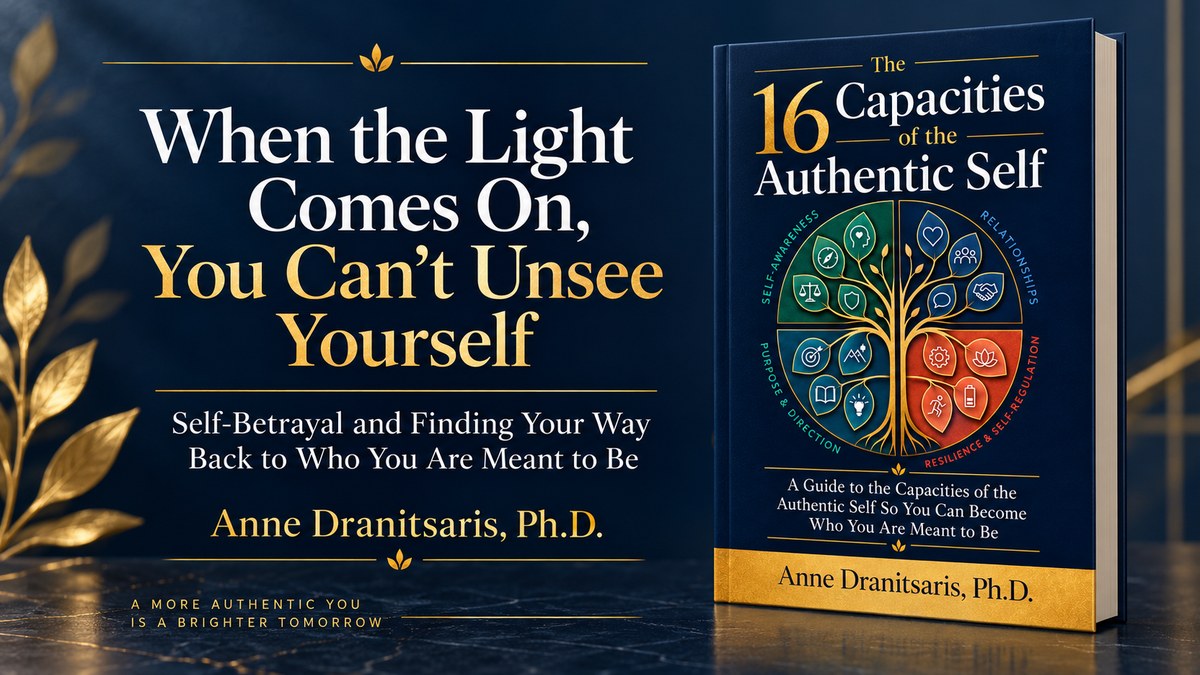
    Next week, my new ebook, The 16 Capacities of the Authentic Self, will be available on my website.

    This ebook is a companion to what I introduced in my book, Are Your Relationship Rules Ruining Your Happiness? It includes chapters on the 16 developmental capacities that strengthen the authentic self, enabling us to shift from living from the adaptive persona to living from the authentic self.

    If you have spent years trying to fix yourself and still feel stuck, this framework may help you see yourself differently. The issue may not be that you have failed to fix yourself. It may be that the capacities of your authentic self are still waiting to develop.

    In my next article, I will explore why the fixing mindset keeps us trapped and how developing the capacities of the authentic self offers a more compassionate and effective path forward.

    You are not broken.

    You are developing.

  • Before You Get Mad at Yourself Again for Giving In . . .

    Before You Get Mad at Yourself Again for Giving In . . .

    Take the Are Your Relationship Rules Ruining Your Happiness? quiz to discover the hidden rule that may be making self-abandonment feel like love.

    There is a funny thing that happens when people start looking honestly at their relationships. They begin by talking about the other person. The partner who shuts down. The friend who takes too much. The adult child who only calls when they need something. The parent who still knows how to make one sentence feel like a guilty verdict on all your failings.

    And to be fair, sometimes the other person really is doing the thing. They are avoiding, demanding, withdrawing, criticizing, overstepping, or expecting you to bend yourself into whatever shape makes their life easier.

    But then comes the more interesting question. Why do you keep playing the same part?

    It’s not because you are weak. Not because you are foolish. Not because you “attract” narcissistic, toxic, or difficult people, which are phrases that sound insightful until they become another way to blame yourself. Usually, you keep playing the same part because somewhere along the way, you learned a rule about what being in a relationship requires you to do.

    When Being Easy Costs Too Much

    Maybe the rule is that you should always think of others first. “You shouldn’t ask for what you want, because it’s selfish.” “Expressing needs is a no-no, because you should never be needy.” “You should be pleasant, manageable, understanding, and low maintenance.”

    The only difficulty with following these unconscious rules in your relationship is that you may eventually discover you have been making everyone else happy at your own expense.

    When the rules revolve around being useful and having to “earn” love, you become the helper, the fixer, or the rescuer. “You should always offer to help, even when you are busy.” “You should anticipate what others need and make sure they aren’t doing without.” “You should be the one who notices, organizes, remembers, follows up, smooths things over, and keeps everything from falling through the cracks.”

    The only difficulty with following these unconscious rules is that you may eventually discover you are no longer being loved for who you are but relied on for what you do.

    These rules keep you disconnected from your needs, and the capacities of the authentic self needed to self-regulate, assert yourself, and negotiate in relationships remain undeveloped.

    Your Rules Feel Like Common Sense

    These rules belong to the brain’s self-protective system and to the adaptive persona that learned how to keep you regulated and safe in relationships. Because you have followed your “shoulds” for so long, they just seem like common sense. You might even see them as proof that you are being loving, loyal, mature, kind, patient, or responsible. But that’s just trying to be good to get approval from others.

    That is why most people do not realize they are living by relationship rules at all. In fact, when I ask clients about the rules they follow in relationships, I am often met with a blank stare. They tell me they do not have any rules. And they are telling the truth, at least from their conscious awareness.

    But we all have unconscious relationship rules. If I ask someone whether they believe they should put others first, avoid disappointing people, keep the peace, be understanding, or help when someone is struggling, most people will not hear those as rules. They will hear them as common sense or evidence that they are a good person. It is only when we begin exploring the hidden “shoulds” behind our choices that the rules become visible.

    Once clients start paying attention, they are often surprised by how many of these rules are operating in the background. And how they expect others to follow the same rules without ever having acknowledged them, let alone spoken about them.

    If a rule arrived with flashing lights and a warning label saying, “You are about to abandon yourself in order to self-regulate and manage your partner,” most of us would at least pause. But this isn’t the way it happens. When the adaptive self is triggered and believes it needs to protect you, the rule shows up as guilt, urgency, anxiety, overthinking, resentment, or the familiar pressure to do what you have always done.

    What the Quiz Helps You See

    This is why I created the “Are Your Relationship Rules Ruining Your Happiness?” quiz. The quiz is designed to help you see the invisible instructions that operate beneath your relationship patterns. It helps you notice the rules that may be informing how you give, tolerate, react, protect, please, explain, withdraw, or overfunction.

    For example, someone may believe they are simply being understanding when they repeatedly excuse behavior that hurts them. But underneath that pattern may be a rule that says, “I should always be empathetic and understanding. If I don’t, I will be mean and selfish.” Someone else may think they are just conflict-avoidant, when what is really happening is that their nervous system has learned to treat disagreement as a threat to self-regulation. Another person may pride themselves on being independent while quietly living by the rule, “I should never need anyone, because needing people makes me weak and needy.”

    Resuming the Development of Your Authentic Self

    Once you begin to see the rule, the whole pattern looks different. You are no longer asking, “Why do I keep doing this?” as though the answer is another reason to judge yourself. You are asking, “What did this once help me survive?” That question comes from curiosity, not criticism, and it opens the door to far more compassion and far more power. A rule that was once necessary may have protected you in the past, but that does not mean it still belongs in the relationships you are trying to create now.

    This is the purpose of the quiz. It gives you a way to explore the shoulds and rules that are operating in the present so you can begin to rewrite them. Instead of seeing yourself as broken, needy, too sensitive, too much, too giving, too guarded, or too difficult, you begin to recognize the adaptive pattern. You begin to understand why certain situations activate you so quickly, and you notice the moment when your authentic self is pushed aside, and the adaptive persona takes over.

    The quiz is not about magically changing every relationship in your life. That would be a very suspicious quiz. It is about identifying where you may be showing up in relationships from your adaptive persona because the capacities of your authentic self have remained underdeveloped.

    Once you can see your pattern clearly, you can make different choices. You may start to notice when you are responding from truth and when you are responding from fear. You may begin to ask whether the rule you are following actually belongs to the adult you are now or to a younger part of you that learned to self-regulate by being good, competent, independent, or easy-going.

    And once you can see that, you can begin the work of becoming who you are meant to be.

    Ready to find out what rules have been running your relationship behavior from behind the scenes?

    Take the Are Your Relationship Rules Ruining Your Happiness? quiz. Take the quiz and start uncovering the hidden “shoulds” shaping your choices, reactions, and happiness.

    Ready to develop the capacities of the authentic self that keep you stuck in adaptive patterns of behavior in your relationships?

    My free guide, The 16 Capacities of the Authentic Selfwith its mini self-assessment questions, helps you identify and begin building the inner capacities that help you love, speak, choose, set limits, and stay connected without abandoning yourself.

  • Why Relationship Patterns Keep Repeating and How to Begin Changing Them

    Why Relationship Patterns Keep Repeating and How to Begin Changing Them

    Understanding the Pattern

    Many people come to therapy or coaching with the same painful question: Why does this keep happening in my relationships? The details may change, but the emotional experience often feels familiar. You may find yourself overgiving, avoiding conflict, choosing emotionally unavailable partners, or feeling responsible for everyone else’s well-being while your own needs go unmet.

    These repeating dynamics are rarely random. They are often rooted in early emotional development, learned relationship rules, and adaptive strategies that once helped you cope but no longer support the life or relationships you want today. What once protected you may now be limiting your ability to connect, communicate, and lead from your authentic self.

    Why Old Patterns Feel So Strong

    Relationship patterns are powerful because they operate beneath conscious awareness. Over time, people develop internal rules about love, safety, conflict, worth, and belonging. These rules can sound like: be strong, do not need too much, keep the peace, prove your value, or never disappoint anyone. Even when these beliefs create distress, they can still feel familiar and therefore safe.

    Lasting change begins when you understand not only what you do in relationships, but why those patterns developed in the first place.

    This is why insight alone is not always enough. You may recognize a pattern intellectually and still feel pulled to repeat it. Real change requires a deeper process of emotional understanding, self-awareness, and developmental growth.

    Signs a Relationship Pattern May Be Running Your Life

    • You repeatedly choose relationships that leave you feeling unseen or emotionally depleted.
    • You struggle to set boundaries without guilt or fear of rejection.
    • You feel responsible for managing other people’s emotions.
    • You avoid difficult conversations until resentment builds.
    • You tie your worth to being needed, productive, or pleasing.
    • You feel disconnected from your own needs, preferences, or voice.

    If any of these feel familiar, it does not mean you are broken. It means there is a pattern worth understanding with compassion and clarity.

    How Change Becomes Possible

    Healing relationship patterns is not about blaming the past. It is about recognizing how your emotional development shaped the ways you protect yourself, seek connection, and respond under stress. With the right support, you can begin to identify the hidden rules guiding your choices and develop new ways of relating that are healthier, more grounded, and more authentic.

    Through psychotherapy, relationship coaching, and developmental work, it becomes possible to strengthen self-awareness, build emotional capacity, and create relationships that reflect who you truly are rather than who you learned you had to be.

    A More Authentic Way Forward

    Whether you are navigating recurring relationship challenges, codependency, imposter syndrome, or the pressure to hold everything together, meaningful change starts with understanding your patterns at their root. When you begin to see yourself more clearly, you can make different choices with greater confidence, self-trust, and emotional freedom.

    Anne Dranitsaris, Ph.D. helps individuals explore the deeper dynamics shaping their relationships, emotional development, and leadership. This work is designed to support lasting transformation, not just symptom relief, so you can move toward healthier relationships and a more authentic life.